SUBSCRIBE

celtic

The Celtic Well

Michele Burke June, 2009

Gaelic Healing Water Spell

Acquire equivalent portions of violet, rosemary, and lavender. After give power to them boil them in approximately one quart of water over a medium flame. Once the water has a rich color and the herbs begin to emit a scent throughout your kitchen, drain off the water off into a jar. An organic coffee filter works well for this. Leave the jar in the sunshine for an entire day to take in the glowing energies from the sun. (To add the healing powers of mercury to the spell do this on a Wednesday) Occasionally gaze into the jar to add your own energies to it.

Just prior to twilight bring back the jar from outside and clutch it tightly between your hands just beneath your naval. Feeling your yearning to be in good health filling the jar, with your mind’s eye envision the jar shimmering as brightly as the sun. Repeat this chant until you have filled the jar with such an overabundance of energy that it can hold no more.

By the sun and by the herb
wellness and I are now as one
spiraling energies now are merged.
Destructive energies now be purged…

Anoint the body where the infirmity lurks if you are uncertain as to where the foundation of them discomforts lies, pour contents into bath water.

Bibliography and Works Cited:

Davis, G. G. (1908). Celtic Healing Water Spell.  Retrieved from great grandmothers Book Shadows.

Celtic Awareness

Michele Burke May, 2009

Celtic Spirituality

Celtic Spirituality is and has always been based on the fundamental knowledge that all existence is born of cyclical nature and therefore, all existence whether human or from nature has a direct link connecting the otherworld to the realm of the material world. From the Druidic teachings handed down through the Welsh tradition we are shown that there is an unseen world that intermingles and affects our perceptible world.

Things are not always as they may seem. Everything that “is” exists on numerous synchronized levels. The human being, the cognitive creature that he is comprehends the world around him as having three dominions or levels as it were: the spiritual, the corporeal (physical), and the emblematic. Consequently, the Celtic culture became one with nature, thusly, expressing their beliefs through the varying possibilities of being. Moreover, Celtic religion has taught the appearance and manifestation of divine beings on Earth and reincarnation of the human soul.

The Celts saw every existing thing or being because being composed from the three realms of reality. These three realms overlie and interrelate with each other in magnificent ways. The astrophysical chart of the primordial Irish people consisted of three realms or spheres (Ord Draiochta na Uisnech, 2003).

known as the “Magh Mor (MOY-mor), Mide (Meath), and Tir Andomain (Cheer ANDO-vain.) In other words, the ancient Irish people “believed in the “Great Plain” of the upper realm of Sky, “Middleland” for the Earth (Land), and “Land-under-wave” for the lower realm of the Sea” (Ord Draiochta na Uisnech, 2003).

The Makeup of the Irish people’s entire reality existed of these three realms, which in combination made up their entire reality. There were and are no boundaries extricating these realms of being, the realms overlap and intermingle into on another; forever shifting and changing within time and realities.

The Three Realms

The Realm of Sky (Magh MOR)

The Realm of land (Mide)

The Realm of the Sea (Tir Andomain)

(Ord Draiochta na Uisnech, 2003)

Just as the Druids of the past we continue our search to seek out the boundaries, holding the thresholds of time and place as powerful and above all sacrosanct. The lands of Tir Andomain (Sea) and Magh Mor (sky) each have influence and authority in our mortal domain the realm of Mide (Land), just as the succession of the seasons is the caused by the oscillation of the Moon and Sun the cycles of death and life are affected by the sphere of the Sea which manifests itself into the realm of Mide (Land) (Ord Draiochta na Uisnech, 2003). Moreover, both Goddesses and Gods hold authority in Magh Mor, Mide, and Tir Andomain. Furthermore, even the mortal realm Mide influences the two other realms, for the depths of the lochs, the burial mounds, and even the caves are entrances to the underworld to the underworld.

Bibliography and Works Cited:

Ord Draiochta na Uisnech, (2003). The Three Realms. Retrieved October 20, 2008, from

http://www.irishdruidry.org/publish/the-three-realms

Bountiful Blessings!!!

Celtic Awareness

Michele Burke April, 2009

Belenus – Celtic God of Beltane

In Celtic mythology the Sun God Belenus worshipped in Britannia, Gaul, Italy, Northern Spain and Austria. Belenus has had shrines erected in his behalf from Aquileia (on the Adriatic) to England (Kirkby Lonsdale). Associated with healing and heat, the meaning of his name is Henbane God or the Shinning one.

It has been said the Belenus may be in fact the same deity as the God Belatu- Cadros from the Roman Empire period and thusly identified with Apollo. His companion is Belisama. Belenus’s name has appeared on inscriptions, concentrated primarily in Cisalpine Gaul and Aquileia, however, these inscriptions have also been found in Noricum and Gallia Narbonensis as well as other distant lands.

Beltane/May Day

Over the years Beltane has been known by many names, in contemporary Irish it is known as Lá Bealtaine, in Scots Gaelic it is known as Bealtiunn, the Welsh know it as the Calends of May (Galan-Mai) and on the Isle of Man (Manx) as Laa Boaldyn, Laán Tourey (Day of Summer) or Shenn da Boaddyn. Beltane is the start of the Summer Half of the Celtic year but what ever the name it is a festival of absolute joy.

A Large number of mythological Celtic events are associated with this day, balancing out it is opposite Samhain. The first people and co-creators of Ireland first landed on the island on Beltane. 300 years to the day later the inhabitants returned to their Other Worldly plane. It was on Beltane that the Tuatha De Danann invaded Ireland. On May Eve Pwyll and Rhiannon’s (the rulers of the Welsh Otherworld) son Pryderi was lost and later found by Teirnyon Twryf Vliant on another May’s Eve after which he was later returned to Pwyll and Rhiannon. The majority of these events concern the forces of darkness being defeated by light

Modern Day Beltane Festivals

One of the major sabbats today is the primeval Celtic fire festival. The Celtic fire festival is the time to observe the unification of the Sun God and the young Goddess, the time when winters darkness copiously retreats and life once more returns to the earth. Like Samhain, during Beltane the shroud between this world and other worldly realms is at its thinnest, in times of yore this was viewed as a time of impending mischief or danger from seditious spirits. Thusly, during Beltane it was a time to mollify these spirits and to begin preparing for the soil in hopes of a good harvest later in the year.

The May Pole

the May Pole represents the impregnation of the Earth Goddess by the Sun God, in the traditional May Pole dance, weaving the ribbons, joins two elements to form the third which represents life at its creation. The fire of Beltane lit in a pit or cauldron represents passions fire. Traditionally, one will jump over the fire for luck or fertility in the upcoming growing season. It is said that a woman will be exceedingly blessed if she becomes pregnant on Beltane. Men wear circlets of green while the women don blossom of circlets.

Excerpt from A Tree Song

Oh, do not tell the Priest our plight, or he would call it a sin;

But we have been out in the woods all night, A-conjuring Summer in!

~ Rudyard Kipling

Bibliography and Works Cited

Kipling, R. (A. D. 1200). A Tree Song. Retrieved March 21, 2009, from http://www.poetryloverspage.com/poets/kipling/kipling_ind.html

Celtic Awareness

Michele Burke March, 2009

Celtic Goddess’s of Fertility

Eostre is the Celtic and Britannia Goddess of fertility associated with the spring and the pagan feast day Ostara, Eostre gave her name to the Christian festival of Easter, Some of the present day Easter customs can be traced back to our ancestors who worshiped her in years gone by, e.g. they Easter egg.

Blessings of Ostara

In the fertility of the earth we celebrate around the mighty Ash

Promises of faith avail over the bleakness

Ostara you have stead fast against the winter wolves’

Bringing forth once again an end to the cold

In joyous exchange for summer’s blessed warmth

~ Michele Burke (2009)

Benedizioni di Ostara (Italiano)

Nella fertilità della terra celebriamo intorno il possente Ash

Avvalgono di promesse di fede nel corso del bleakness Ostara avete sostitutivi fast contro i lupi inverno ’

Portare via ancora una volta porre fine al freddo

In cambio gioiosa calore Beato dell’estate

Ho cercato di tradurre questo verse ho scritto in italiano ecco che cosa sono giunto fino con

Finora potrebbe dirmi se è corretto?

~ Michele Burke (2009)

ANU

Anu represents the Maiden aspect of Morrigu the Goddess of Mother Earth; she is the manifestation of moon, magic, air, prosperity and fertility.

Olwen

Olwen the Welsh (Celtic) Goddess of the spring flowers symbolizes the earth’s rebirth after a

long winter and love.

The Awakening

Beneath the ancient oak Olwen sleeps

Rhizome arms lie across flowering white breast

Hair blossoming like fragrant chamomile awakening in the spring

Il risveglio (Italiano)

Sotto la quercia antica sleeps chiara

Rizoma armi risiedono tutta della mammella fioritura bianco

Capelli fioritura come camomilla profumato risvegliando nella primavera

~ Michele Burke (2009)

Cerridwen

Cerridwen is th embodiment of fertility, luck, death, regeneration, the arts, poetry, science, inspiration and astrology.

Cerridwen’s Cauldron

In her cauldron she prepares a magical brew.

Yielding three precious drops, each drop its own bestowment has

One for wisdom, One of knowledge and one the secrets of times to come

~ Michele Burke (2009)

Magico di ’s Cerridwen (Italiano)

Nel suo calderone ella prepara un brew magico.

Cedendo tre gocce preziose, ogni goccia che ha la propria bestowment

Uno per la saggezza una delle conoscenze E uno i segreti dei tempi a venire

~ Michele Burke (2009)

Druantia

Queen of the Druids. Druantia mother of the Druid tree calendar and Goddess  of the Fir, Druantia is the embodiment of fertility, protection, creativity, knowledge, passion, growth, sex, and the forests and the tree’s.

Coming in April: Celtic God’s

Celtic Awareness

Michele Burke February, 2009

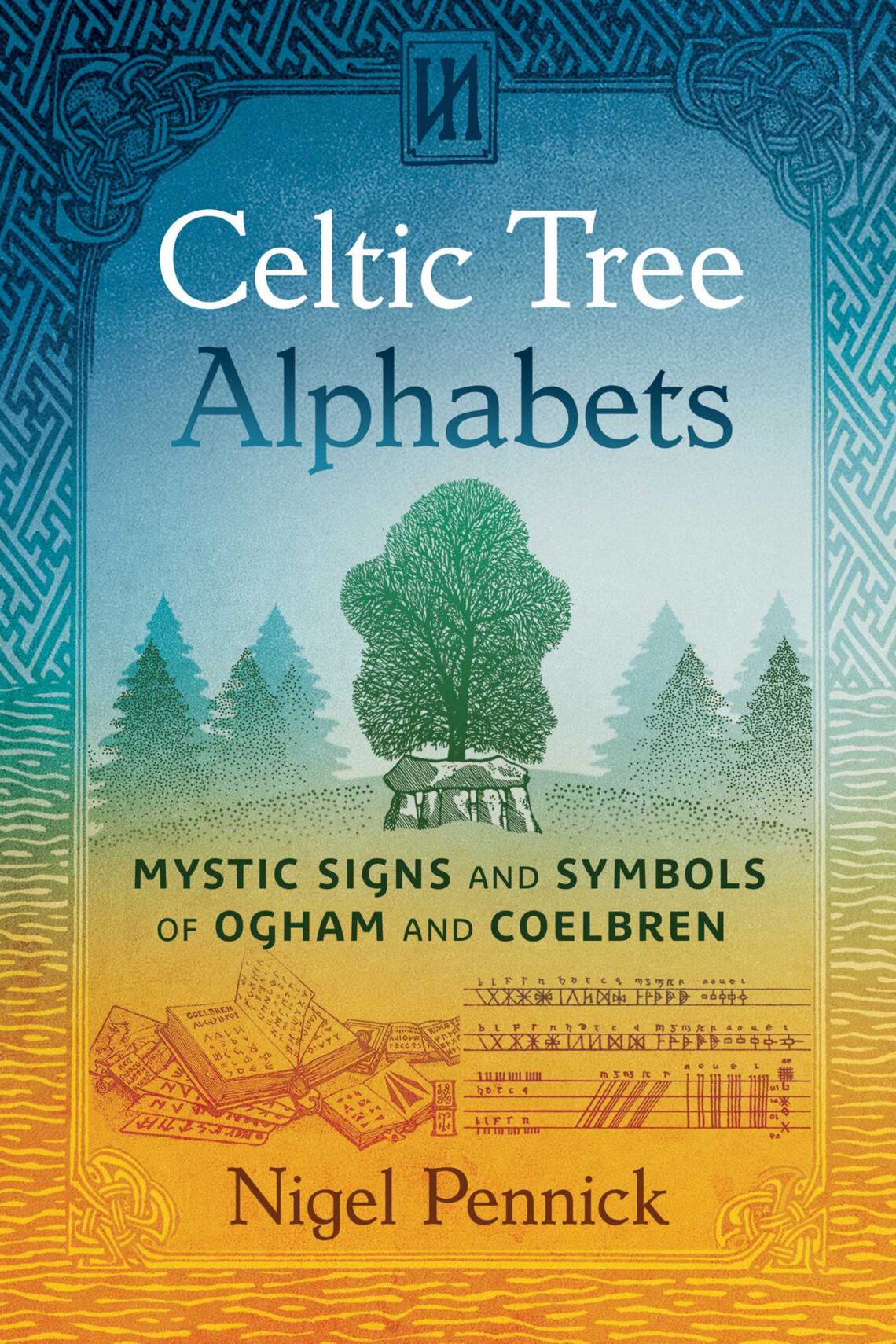
What is the Ogham? And where do they come from?

The Druid Ogham alphabet fits flawlessly into the mystic culture of the Celts. The rareness of the Ogham alphabet makes it easy to see why the Celta believe that it was bequested to them by the Tuatha de Danaan God Ogma (the God of Eloquence).

The source of the Ogham is shadowed in mystery. Unclear as to where and when the ogham alphabet began to be used. It has been said that Julius Caesar, (first century BCE), aknoledged that druids used the Ogham in Gaul, nevertheless, scientistific research to date has not been able to find any evidence of Ogham carvings previous to 300 CE. This gap in time shows to be mysterious and furthers the belief that the Tuatha de Danaan may well be responsible (this is my belief). Nevertheless, putting all mysteries aside let us move on to the important question of what we do know about this mystical alphabet and the individuals who used it?

Primaraly carved onto wooden staves this practice can be seen in Bardic Irish literature, and in fact by the names given to them (named after trees)early in th Oghams history. In the medieval manuscripts of Ireland the Ogham alaphabet known as the Beth-Luis-Nion referring to the first three letters of their Galic names, which coincedentaly are also names of trees. Beth is the birch, Luis mountain-ash or rowan, and Nion the ash tree.

In addition to the Oghams being used and recognized by their names they were also used in the Celtic Tree Calandar. These Druid Oghams comprised the Celtic calander in which it had  thirteen months, the extrady in the Celtic calandar was observed as a day of ritual to renew the year.

According to Míchealín Daugherty (2006)

The Celtic Tree Calendar is a system that  provides a means pf following the lunar changes in the year’s energies as well as the solar ones. The thirteen trees are representative of the thirteen new moons that occur each year. The Druids believed the human race originally descended from the trees. Each tree had particular magical qualities. They encoded these mysteries in a secret shamanic alphabet, known as the Ogham, the origin of which is ascribed to Ogma, the Celtic God of

    • Poetry

  • ” (p.1).

    And inturn created  the druid calandar in association with the trees that the Oghams were linked to.

    Shone the sunset red and solemn: Muirgen, where he leant, observed
    Ogham

    • Poetry

  • :

    Down the corners of the column letter-strokes of Ogham carved.
    “Tis, belike, a burial pillar,” said he, “and these shallow lines
    Hold some warrior’s name of valour, could I rightly spell the signs.”
    Letter then by letter tracing, soft he breathed the sound of each;
    Sound by sound then interlacing, lo, the signs took form of speech;
    And with joy and wonder thrilling, part a-thrill with fear,
    Muirgen read the legend plainly, “Fergus son of Roy is here”.

    ~ Sir Samuel Ferguson, (1865)

    So in conclusion one can see that even though there may never be a scientific explanation as to where and when th Ogham first came to be thouse of us who believe know it came from Ogma God of  the Tuatha de Danaan.

    Bibliography and Works Cited:

    Daugherty, M. (2006). The Celtic Tree Calendar. Irelands Own. Retrieved January 21, 2009, from http://irelandsown.net/celtictrees.html

    Sir Samuel Ferguson, Lays of the Western Gael, 1865.

    Celtic Awareness

    Michele Burke December, 2008

    Gaelic Healing Water Spell

    Acquire equivalent portions of violet, rosemary, and lavender. After give power to them boil them in approximately one quart of water over a medium flame. Once the water has a rich color and the herbs begin to emit a scent throughout your kitchen, drain off the water off into a jar. An organic coffee filter works well for this. Leave the jar in the sunshine for an entire day to take in the glowing energies from the sun. (To add the healing powers of mercury to the spell do this on a Wednesday) Occasionally gaze into the jar to add your own energies to it.

    Just prior to twilight bring back the jar from outside and clutch it tightly between your hands just beneath your naval. Feeling your yearning to be in good health filling the jar, with your mind’s eye envision the jar shimmering as brightly as the sun. Repeat this chant until you have filled the jar with such an overabundance of energy that it can hold no more.

    By the sun and by the herb
    wellness and I are now as one
    spiraling energies now are merged.
    Destructive energies now be purged…

    Anoint the body where the infirmity lurks if you are uncertain as to where the foundation of them discomfort lies, pour contents into bath water.


    Bibliography and Works Cited:

    Davis, G. G. (1908). Celtic Healing Water Spell.  Retrieved from great grandmothers Book
    Shadows.

    Celtic Awareness: Celtic Spirituality

    Michele Burke November, 2008

    Celtic Spirituality is and has always been based on the fundamental knowledge that all existence is born of cyclical nature and therefore, all existence whether human or from nature has a direct link connecting the otherworld to the realm of the material world. From the Druidic teachings handed down through the Welsh tradition we are shown that there is an unseen world that intermingles and affects our perceptible world.

    Things are not always as they may seem. Everything that “is” exists on numerous synchronized levels. The human being, the cognitive creature that he is comprehends the world around him as having three dominions or levels as it were: the spiritual, the corporeal (physical), and the emblematic. Consequently, the Celtic culture became one with nature, thusly, expressing their beliefs through the varying possibilities of being. Moreover, Celtic religion has taught the appearance and manifestation of divine beings on Earth and reincarnation of the human soul.

    The Celts saw every existing thing or being because being composed from the three realms of reality. These three realms overlie and interrelate with each other in magnificent ways.  The astrophysical chart of the primordial Irish people consisted of three realms or spheres (Ord Draiochta na Uisnech, 2003).

    Known as the “Magh Mor (MOY-mor), Mide (Meath), and Tir Andomain (Cheer ANDO-vain.) In other words, the ancient Irish people “believed in the “Great Plain” of the upper realm of Sky, “Middleland” for the Earth (Land), and “Land-under-wave” for the lower realm of the Sea” (Ord Draiochta na Uisnech, 2003).

    The Three Realms

    The Realm of Sky (Magh Mor)

    The Realm of the Sky represents the future and the spiritual. Many of the Gods and Goddesses reign over this realm, though it should be understood they transcend all three realms.

    • Correspondences

  • : Gods/Goddesses, Other World, Spiritual.

    The Realm of Land (Mide)

    The Realm of the Land represents the present and the phyiscal. We are beings of this realm that we share with the animals and the nature spirits.

    • Correspondences

  • : Present, Nature, Spirits, Our World – Physical.

    The Realm of Sea (Tir Andomain)

    The Realm of Sea represents the past and the mental and emotional aspects of existence. This is the dwelling place of our Ancestors, whom we wish to know and honor.

    • Correspondences

  • : Past, Ancestors, Underworld, Mental/Emotional.

    (Ord Draiochta na Uisnech, 2003)

    The Makeup of the Irish people’s entire reality existed of these three realms, which in combination made up their entire reality. There were and are no boundaries extricating these realms of being, the realms overlap and intermingle into on another; forever shifting and changing within time and realities.

    Just as the Druids of the past we continue our search to seek out the boundaries, holding the thresholds of time and place as powerful and above all sacrosanct. The lands of Tir Andomain (Sea) and Magh Mor (sky) each have influence and authority in our mortal domain the realm of Mide (Land), just as the succession of the seasons is the caused by the oscillation of the Moon and Sun the cycles of death and life are affected by the sphere of the Sea which manifests itself into the realm of Mide (Land) (Ord Draiochta na Uisnech, 2003). Moreover, both Goddesses and Gods hold authority in Magh Mor, Mide, and Tir Andomain. Furthermore, even the mortal realm Mide influences the two other realms, for the depths of the lochs, the burial mounds, and even the caves are entrances to the underworld to the underworld.

    Bibliography and Works Cited:

    Ord Draiochta na Uisnech, (2003). The Three Realms. Retrieved October 20, 2008, from

    http://www.irishdruidry.org/publish/the-three-realms

    Celtic Awareness

    Michele Burke October, 2008

    Ancient Samhain Rituals


    2,000 years ago, the Celts who lived in the region now known as Ireland, Northern France, and the United Kingdom, celebrated their new year on the 1st. day of November. The New Year symbolized the end of the harvest and of summer and the commencement of the cold, gloomy, dark days of winter, oftentimes, this time of year was associated with death. The Celts believed the hours of darkness preceding the new year, was the time when the veil between the living and the dead was at its thinnest, and it was on this night October 31 that the Celts celebrated Samhain, at what time it was believed that the spirits of the departed would cross the veil and return to earth. The Celts believed that these ethereal spirits not only were the cause of crop damage and overall mischief but their presence aided the Druids in making prediction of the future. For the ancient Celts these predictions were a vital spring of “comfort and direction” throughout the long, mysterious winter. Enormous sacred bonfires were built by the Druids to venerate the event, where everyone would gather to offer animals and burn crops as offerings to the Celtic deities.
    Celtic Deities Chart

    Abarta Brigid Epona Nantosueh
    Aine An Caillead Goibriu Nechtan
    Amaethon Camuolos Gwydion Nemglan
    Andraste Cernunnos Gwynn ap Nudd Nuadha Airgetlamh
    Arawn Cerridwen Lir Oenghus
    Arianrhod Ciodhna Luchtaine Ogma
    Balor Creidhne Lugh Rhiannon
    Bile Danu Mabon Sucellus
    Bel An Dagdha MacCecht Sovereignty
    Bloudeuec Dian Cecht Macha Tailtu
    Boann Don Manannan mac Lir Tararis
    Bendigeidf Donn Mathap Mathonwy Tiemon
    Bres Dylan The Morrighna

    During the festival of Samhain the ancient Celts wore ceremonial costumes, classically made from the skins and heads of animals, and “attempted to tell the fortunes of each other.” Samhain is also known as the butcher’s harvest. This was the time of year when livestock was slaughtered for food for the oncoming winter months. After the gala had come to an end, their hearth fires were re-lit (which had be put out earlier in an attempt to ward off otherworldly spirits) from the hallowed bonfire that was built to help protect them throughout the impending winter.
    Traditions Combine
    By the time of the Roman conquest of Britain (A.D. 43), the Roman Empire had dominated the greater part of the Celtic region. Over a span of four hundred the Romans ruled the Celtic lands; and as a result two festivals of Roman derivation were combined with the traditional Celtic festival of Samhain.
    The first Roman festival to be integrated into the Celtic tradition was Feralia, traditionally memorialized by the passing of the dead; the Romans celebrated Feralia in late October. The second Roman festival was in honor of the Roman goddess Pomona, goddess of fruit and trees.
    Pomona’s symbol is the apple and the integration of this festivity into Samhain most likely explains the tradition and or custom of “bobbing” for apples that still today is practiced in modern Halloween celebrations.
    The Christian Influence on Samhain
    By the seventh century, the wide reaching weight of Christianity had stretched into the Celtic lands. By this time, Pope Boniface IV designated the first of November as All Saints’ Day, a time to honor martyrs and saints alike. It is commonly thought in the present day that Pope Boniface was skillfully trying to replace the Celtic festival of Samhain with an associated and or more commonly related, but church sanctioned celebration. This festivity was also referred to as All-Hallowmas (from the English spoken between the 12th and the beginning of the 16th centuries) Alholowmesse meaning All Saints’ Day) or All-hallows as well as the preceding night before, and as such, the evening of Samhain, was in turn to be known as All-hallows Eve and ultimately, Halloween. Furthermore, in the ninth century, the church designated the second of November as All Souls’ Day, a set aside to honor the dead. Celebrated much in the same way as Samhain, with parades, big bonfires, and dressing in costumes as angels, devil, and saints. Collectively, the three celebrations and or festivals, All Saint’s Eve, All Saints day, and All Soul’s day, were known as Hallowmas.
    For modern Pagans this is the Day of the Dead just as it was for the Celts so many years ago, a night to honor ancestors and remember deceased loved ones. Whether one celebrates Halloween or Samhain makes little difference as long as it is done in solemn remembrance of dead.
    Now the Rite Is At an End
    And now the rite is at an end, again we’re parting ways
    May truth and honor be your friend and lucky be your days
    I’ll hold you dearly in my heart; I’ll hold you in my mind
    And though our branches grow apart, our roots shall be entwined.
    ~ Paul Kershaw and Marae Price (Ár nDraíocht Féin, 2008).

    Bibliography and Works Cited:
    Apple Warrior, (2004). Celtic Deities. Retrieved September 16, 2008, from
    http://www.applewarrior.com/celticworld/celticdeities/atoc.html
    Ár nDraíocht Féin, (2008). Now the Rite Is At an End. Retrieved September 17, 2008, from
    http://www.adf.org/rituals/chants/recessional/now-the-rite-is-at-an-end.html
    History.com. (1996-2008). The History of Halloween. Retrieved September 16, 2008, from
    http://www.history.com/minisites/halloween/viewPage?pageId=713