Ostara

Rites and Rituals

John Conlin March, 2011

Ostara and the Quickening Moon, the Magick of Spring

“I remember that I kissed you,

I kissed you as dawn kissed the day.

Sweet dew wet your lips,

You took my breath away.

The Earth trembled beneath our touch,

The forest moaned with our lust,

as I kissed you so endlessly.

And the Wheel turns, can you feel the fire burn inside?

Do you hear the wind sing our names,

of a destiny that cannot be changed.

As it is willed, so is it done,

our dance is now begun,

when the Moon is kissed by the Sun.”

Ostara, the Vernal Equinox, is the place upon the Wheel where the magick of Water and that of Fire, truly begin to embrace. It is the moment where the great dance, first softly whispered at Imbolc, begins to surrender within the passion of Spring’s song. These are Nature’s days of seemingly reckless abandon as the forces of shadow and light spectacularly crash upon each other, casting a stunning display of color across the skies. Dark rain laden clouds break against the mountain’s flanks just before an ever more determined Sun tears them asunder with shafts of brilliant light. Rainbows, conjured from this eternal battle for dominance, are born over forest and field alike. I stand in the midst of this inspiring chaos and I open myself to Nature’s wonder. I do my best to mimic the great trees beside me, reaching above and below to bridge the worlds. The energy present, as old as the stars, yet reborn within this moment, now rains down over my outstretched spirit while I breathe with the trees. Beneath my feet, all that was returned by Fall’s touch and diminished through Winter’s hold, now vibrates with anticipation of the transformation summoned as the great cauldron of Spring is vigorously stirred. From the above and the below these energies embrace and entwine. Their spell of warm and wet joined, spreads like an unseen mist, drifting over forest and field, intoxicating all it touches with the passionate, magick of life. With my arms outspread, my hands pressed against the old skin of the two cedars towering over me on either side, I gently move my feet until I feel a connection with the damp earth. Slowly and deeply I breathe. Three breaths up from the Earth below, three breaths down from the far reaches above and finally, three breaths to connect  the above and below with my core. The energies present begin to move through me as I do my best to stand as a doorway, open, yielding my ego to Nature’s flow. The rush of Spring fills my spirit, carrying away the mundane world’s possession of my conscience, unbinding my senses as I feel my awareness heighten. I can feel the patience of the old trees within me, focusing my vision, allowing me to peer deeper into the heart of the forest. As my ears listen to the myriad chorus of birds and insects vying for attention, further within I begin to hear the whispered words of the great dance’s song. A gentIe, cool breeze envelopes me and I can taste the richness of the forest’s flora floating above the dark soil, just as my eyes take note of all the buds about to blossom.  The song grows stronger and I can almost see the Maiden gliding through forest and field, radiating her magick and seducing all in her path to become infatuated with Spring’s passion. I can almost see the youthful God stepping out from shadowed vale, reaching for her hand and asking for this dance. Tears well in my eyes as I feel my heart expand with the love I hold for my goddess. I think of the son we brought into this world as my tears are returned to the Earth. I feel so connected to all that exists around me, seemingly able to fathom all that shall soon come to pass, bridging in this fleeting moment, the past to the future. This is the wonder of Spring, the ability to make us all believe that something more lies ahead, if we just trust the dreams held in each of our hearts. Movement pulls my eyes out over the river to catch an eagle traveling upstream toward the mountain. It pulls me back and I realize the day is waning.  Soon the Quickening Moon will be full, shimmering down over a forest and river too busy to sleep and the stark stillness of the Snow Moon will have faded into distant memory.  I do not know how long I stood between the two trees and drifted but I think that is the goal. For Spring is the time upon the Wheel to immerse one’s self in wonder. These are the days to allow yourselves to suspend belief in the trappings of the mundane world and walk, with a spirit open to Nature’s magick. Merry Ostara to one and all……………..                           

Journey of a Witch

Sky_Emmons March, 2011

Ostara-Goddess of Light

“In the light
Everybody needs the light.”
Led Zeppelin

The radiant dawn.

Who is the Goddess Ostara?
Does she hail from Germanic lands or elsewhere?
In some Pagan and Wiccan circles, March is associated with the Spring Equinox and the Goddess Ostara.

Controversies surround the validity of Ostara and her associations.

Bede the Venerable wrote about a Spring Goddess called Eostre who was honored with feasts during April.
There are some who that believe Bede the Venerable simply made her up in his writings.
Bede was an English monk who lived in the 8th century.
He was responsible for writings of historical, theological, and other works, and is regarded as a historian today.
Still, other historians think she was the reconstructed dawn goddess from various prehistoric cultures.

While I am certainly no historical scholar it is fascinating to read about human history.
Writings based upon older writings, based upon even older writings, based upon oral tradition seem to be the flow.
Meanings can get lost in language translations, the bias of the writer, and in time itself.
And let’s not forget that history is written from the perspective of the conqueror.
I do think people can get caught up in the past and forget what is going on in the present.
Regardless of the origins of Ostara, we have the seasons happening right now, whether that is a snowflake, raindrop, or sunshine.

Absence of validity is only important in those looking for validity in themselves.

The essence of Ostara is in the blooms and the gentle winds that surround you.
She remains within our memory and lives in the trees and grass.
In every heart today and in the past.

Though spring may not have been celebrated as it is today in modern pagan rites, it was a very important time for agricultural societies to plant crops after the last frost.
These people of old most likely did not perform elaborate rituals for the seasons, there was no time!  Living off the land they were already a part of the cycle of the seasons and a part of Nature that we are very much removed from in our modern cities.

Spring was relief from the bitter cold, a time when food became plentiful, and the dullness of days inside were sweetened by the taste of spring outside.

Spring is also the time when animals are busy making baby animals.
That baby bunny may look cute in the pet store but that baby bunny grows up.
It can be surprising as to how big a cute tiny bunny can get and how long they can live.
If you are looking for a bunny or any animal it is very important to research that animal, its care, housing, and life expectancy.
Be sure you are ready for a financial and life commitment.

Shine on.

Spring can teach us to honor our own light by reaching out to others whose light has dimmed.
Like the Dawn Goddess bringing light to the day, you can bring light for someone in need.
Whether that light shines on a person, creature, or Earth you will be sending Love and Light.
Plant a garden, even if just a sprig of Rosemary in your window sill. It will reward you with with seasonings and reminders that nature exists even in crowded cities.
Send a care package to a soldier (http://anysoldier.com/).
Read to an elderly person or take them a meal. Donate blankets to an animal shelter.
There are many things one can do to shine light on a dim day.

This is not only a good time for that spring cleaning but also a time for spiritual cleansing.
Let go of the harboring you cradled in winter. Release them into the wind to transform into droplets of dew or mist.

Everybody needs the light.

In the first warmth of the sun on the Spring Equinox greet Ostara or just the light you feel and release your pain to the warmth.
Light and Love can transform pain into joy. Share your day with loved ones with a meal held in honor of Ostara or Light and Love if you wish. Light gold or peach colored candles to bring in the day and let light bring its warmth. Meditate on the light and plant those seeds of patience, love and kindness within yourself to help you on your spiritual journey.

Radiate your light and shine on.

Enchanting Eats

E.R. Allen March, 2011

Ostara is approaching. I can already feel the winds of March, blowing out the winter, blowing in the spring. During this time of year, I dwell on sprouts and spring lettuces, green onions, and tender herbs. Other foods associated with the early spring are eggs, seeds, edible flowers, honey, carrots, rabbit, hot cross buns and other sweet baked goods. Again, find what is in season for your region and what “rings true with you.”

Last year I became fascinated with bento boxes and funneled that inspiration into our Ostara meal. There is a lot of prep work, but I think it engages you, reconnecting you with the food. This is a wonderful activity for a family, group, or coven to participate in. Everything can be set up in advance so that each person is able to choose their own ingredients and construct their own unique scene. You may even create an additional piece as an offering. I used the construction time to explain the significance of each ingredient and how it relates to Spring.

Ingredients

Prepared short grain or “sushi” rice, cooled (2 cups is plenty for 4)

Hard-boiled eggs

Alfalfa sprouts, spring lettuces

Raw vegetables, such as carrots, cucumbers, bell peppers, green onion

Edible flowers, such as pansies, tulip petals, dandelions. Just make sure they are in fact edible and pesticide free!

Herbs, such as lavendar and thyme

Directions

1. Give each participant a plate or bowl. Set out paring knives, peelers, and other tools to share.

2. Arrange a bed of sprouts and/or greens on the dish as a base.

3. Using wet hands, roll the rice into a symbol of Spring. We chose bunnies. (Make a mini snowman. Use slivers of carrot for the ears and cucumber halves for the hind feet. Black sesame seeds work well for eyes and whiskers.) Other options could be a rain drop, clouds, or a nest to hold your hard-boiled egg.

4. Add vegetables, flowers, and eggs, carved with symbols or cut into images that represent Spring. You can use metal cookie cutters on most vegetables, as well as cheeses. If it will not go through, use it as a stencil with a paring knife.

Once everyone is finished, a blessing or poem would be entirely appropriate. Enjoy and Blessed Be!

Look! The Earth waits breathless

After winter’s strife

Ostara shows folk deathless

Spring leads death to life

-from “Ostara Carol” by Anna Stockinger

Ostara Correspondences

Administrator March, 2011

(Oh-star-ah) – Lesser Sabbat – Spring/Vernal Equinox, March 20-21st – when the Sun enters Ares

Other Names: Ostre, Oestre, Eostre, Rites of Spring, Eostra’s Day, Lady Day, First Day of Spring, Easter, St. Patrick’s Day, Alban Eiler, Bacchanalia, Mean Earraigh, Pasch, Caisg, Pess

Date: Spring Equinox (March 20-22 in Northern Hemisphere) or when the Sun is 1 degree Aries.

Symbolism: The beginning of spring, new life and rebirth, the God and Goddess in Their youth, balance, fertility

Goddesses: all love, virgin, and fertility Goddesses; Anna Perenna (Roman), Aphrodite (Greek), Astarte (Canaanite, Persia, GrecoRoman), Athena (Greek), Cybele (Greco-Roman), Blodeuwedd, Eostre (Saxon Goddess of Fertility), Flidais (Irish), Gaia (Greek), Hera, Ishtar (Assyro-Babylonian), Isis (Egyptian), Libera (Roman), Minerva (Roman), The Muses (Greek), Persephone (Greek), Renpet (Egyptian), Venus (Roman), Ostara (the German Goddess of Fertility), Kore, Maiden, Isis, Youthful Goddesses. Faerie Queen, Lady of the Lake(Welsh-Cornish), the Green Goddess

Gods: all love, song & dance, and fertility Gods; Adonis (Greek), Attis (Greco-Roman), Cernunnos (Celtic), The Great Horned God (European), Liber (Roman), Mars (Roman), Mithras (Persian), Odin (Norse), Osiris (Egyptian), Thoth, Pan (Greek), the Green Man, Hare, Youthful Gods, Warrior Gods, Taliesin, Lord of the Greenwood (English), Dagda(Irish),Adonis (Greek)

Symbols: Eggs, rabbits, similar to easter symbols.

Purpose: Plant and animal fertility, sowing

Meaning: The God comes of age, sexual union of the Lord & Lady, sprouting, greening, balance of light and dark

Essence: Strength, birthing, completion, power, love, sexuality, embodiment of spirit, fertility, opening, beginning

Customs: Wearing green, new clothes, celtic bird festival, egg baskets coloring eggs, collecting birds eggs, bird watching, egg hunts, starting new projects, spring planting

Foods: Hard-boiled eggs, honey cakes, fresh seasonal fruits, milk punch, leafy green vegetables, dairy foods, apples, nuts, flower dishes, sprouts, fish, maple sugar candies, hot cross buns, sweet breads, milk, punch, egg drinks

Plants & Herbs: Acorn, celandine, cinquefoil, crocus, daffodil, dogwood, Easter lily, Irish Moss, ginger, hyssop, linden, strawberry, gorse, honeysuckle, iris, jasmine, jonquils, narcissus, olive, peony, rose, tansy, violets, woodruff and all spring flowers

Incense and oils: African violet, jasmine, rose, strawberry, lotus, magnolia, ginger, sage lavender, narcissus, broom

Colors: Light green, lemon yellow, pale pink, pastels, gold, grass green, robin’s egg blue, lemon yellow.

Stones: Amethyst, aquamarine, rose quartz, moonstone, bloodstone, red jasper

Animals and Mythical Beasts: Rabbits/Easter bunny, snakes, pegasus, unicorns, chicks, swallows, merpeople

Decorations: Daffodils, tulips, violet, iris, narcissus, any spring flowers, eggs, butterflies, cocoons

Spell/Ritual Work: Garden/plant blessings, seed blessing, spellcrafting, balance, growth, communication, invention, new growth, new projects

Planetary Ruler: Mars

Element: Air

Gender: Male

Threshold: Dawn

Airmid’s Cauldron

Ceilteach Moon March, 2011

Ostara recipes

Cheesy Poppy Seed Bread
1 cup biscuit mix

1 cup shredded cheese
1/2 cup milk
1 egg
1/4 cup chopped onions
1 T. poppy seeds

Combine

Biscuit mix and Cheese a in bowl
Add milk and stir until moistened pat dough into pan of choice
Combine remaining cheese, egg and onion and spread over biscuit dough
Sprinkle with poppy seeds and bake at 425 for 15 to 20 minutes

Violet Salad

1T raspberry vinegar
1T minced Shallot
1/2 t Dijon mustard
fresh ground black pepper
1 1/2 t chicken stock, vegetable for vegetarians
1 1/2 t virgin olive oil
1/2 lb. mixed greens washed
1/4 cup violet blossoms
1/4 cup dried cranberries (optional)
Combine vinegar, shallot, mustard and some pepper in a small bowl.  Let stand 5 minutes
Whisk in stock then oil.  Toss greens with dressings, top with violets and cranberries and serve immediately.

Goddess Cards

Anne Baird April, 2010

The Signs of Easter

Ostara Goddess Cards


It’s Easter time, and Easter Bunnies and Easter eggs are everywhere!  At school and at home, children dye and paint eggs, hardboiled by mothers or teachers, in preparation for the great feast of Easter. Some prepare “nests,” or baskets, filled with artificial or real grass, in which to place the colored eggs.  This custom harks back to a time when people actually believed that rabbits laid eggs, since their burrows were in the ground where ground-dwelling birds like plovers, really did lay eggs.

The night before Easter, fond parents hide chocolate or hardboiled eggs, allegedly hidden by the Easter bunny, round the house or garden. Children hunt for them on Easter morning. These Easter rituals have been going on for thousands of years!  Where and when did they begin?

Some trace the origins of the Easter bunny and eggs back to the Pagan Anglo Saxon goddess, Oestre, or Ostara.  Ostara was the Germanic goddess of spring.  Like most goddesses associated with the Vernal Equinox, and the rising fertility of the Earth as winter retreats, she is a fertility goddess. She was associated with the Moon Hare or rabbit, and with eggs, both symbolic of renewal and regeneration. (Rabbits are notoriously prolific, and the egg is an age-old symbol of birth and resurrection.)

Mary Magdalene and the Egg Goddess Cards

These icons were co-opted by Christianity. Pope Gregory the Great  (approx. 540-590 A.D.) ordered his missionaries to incorporate old religious customs wherever possible into Christian rituals, to make new converts feel comfortable. The Pagan feast of Oestre, with its celebration of new life and rebirth, symbolized by her hares and eggs, fit perfectly with the Resurrection of Christ.  To this day, the Eastern Orthodox Church celebrates Easter morning by the cracking of red Easter eggs (dyed red to symbolize the blood of Christ) and the greeting “He is risen!” An ancient icon of St. Mary Magdalene, one of Christ’s most ardent followers, shows her holding a red Easter egg bearing the words “Christ is risen,” as well as the bottle of perfume with which she anointed the Master’s feet shortly before his crucifixion.

Faberge Egg Goddess Cards

Royalty brought the lovely peasant custom of the giving of Easter eggs to new, artistic heights.  Czar Alexander III of Russia  (1845-1894) commissioned golden Faberge eggs as Easter gifts for his wife, Maria Fyodorovna.  Ten of these priceless, jeweled Easter eggs are now on display in the Kremlin in Moscow.

The Easter egg that we know and love in the West shows up in other cultures as well. The great Persian festival of spring, called Nowruz, or New Year, celebrated on March 21st, includes painted eggs on the Haft Sin table. There, seven items, symbolic of the coming of spring, all beginning with the letter “S, ” convey the wishes and hopes of each family for the coming year. This custom dates back to the ancient Zoroastrians.

And at the Jewish Passover Seder, celebrated at the end of March, guests eat roasted eggs dipped in salt water, as a reminder of the sacrifice offered in the great Temple of Jerusalem. The egg is part of a plate of six symbolic foods, that relate to the Exodus from Egypt.

The Easter celebrations of the present, then, have a long, distinguished history. What do they have in common?

They are all celebrations of returning spring, of renewal, rebirth, regeneration and hope. Hope for the New Year. Hope for our families. Hope for the world.

Must Be Easter Goddess Cards

In my new Easter illustration, I have taken a look at the beloved celebration from a new perspective. The familiar figures are there: mothers, children, rabbits and eggs. Spring is in the air. Daffodils are up. New life abounds. Fun is the mission of the day.

But this time, we see the festivities through the eyes of the rabbits. If Easter eggs and rabbits are symbols of Easter to us, the happy children and their mothers, masquerading as rabbits, eggs, and Easter chicks, are an infallible sign of the season to the rabbits.

“Must be Easter again,” one whispers, as the children troop past.

Of course! What else could it be?

Happy Easter!

Anne Baird, Designer/Owner of GODDESS CARDS, is a self-taught artist who has been painting and writing since childhood. Her chosen media for her unique line of greeting cards is watercolor, with touches of gouache, ink and colored pencil.

Her GODDESS CARD line grew from a birthday card she created for her daughter, Amanda, in 2001. Amanda was disheartened at being a curvaceous beauty in the Land of Thin. (Los Angeles.) That seminal card declaring, “You’re a GODDESS, not a nymph!” evolved into a long line of love notes and affirmations for ALL women. At over 125 cards, the line is steadily growing.

Anne is inspired by the archetypal Legendary Goddesses, who have so much to teach today’s women. Her greatest inspiration however, comes from the Goddesses of Today, who write her with wonderful suggestions and thoughts that expand her consciousness and card line.

She has launched  an E-Goddess Card website, where the Goddess on the Go can send Goddess “e-cards”, enriched with music and stories, at the click of a mouse. (A virtual mouse.)

Rebel Rede

Hoi Sum April, 2010

A Harm Free Spring

Spring has always been the time of year represented by themes of fertility, renewal, and hope. For Pagans it is the time of year when the Goddess is symbolically pregnant with God. We celebrate the Sabbats of Ostara and Beltane. These Sabbats are centered around the natural season and have the same themes of fertility, renewal, and hope. Ostara and Beltane altars are decorated with flowers, eggs, rabbits, baby chickens and other symbols of spring and fertility. The Christian and secular based versions of Easter share these same symbols of spring. After all, Ostara is the original spring holiday before it was Christianized and became known as Easter. The Easter egg hunt is one of the many long standing traditions still practiced in most American households, even Pagan ones. This spring season in particular though I have started to take a new look at these old traditions of ours. Why do we “hunt” the eggs? Why do we decorate our altars with eggs and rabbits? Why my sudden curiosity in these old traditions? One word veganism. I recently made the transition from being vegetarian to being vegan and I have been surprised by how much this decision has changed by view of Ostara practices. I decided to be vegan because I could no longer support the brutally violent and cruelty filled dairy and meat industries. One of the reasons I have decided to make this change is because of my Wiccan beliefs. When I was a Christian I was taught that animals have no souls, and that God gave us humans dominion over them (to do to them whatever we please). Once I became Wiccan though my world view slowly started to change. I now believe in the Divinity of all living creatures and that we are all connected. Humans are a part of nature, just like all animals are. If animals are Divine how can I justify the torture and inhumane killing of them? In addition to my acceptance of the Divinity in all things, I also adopted the Wiccan rede as a spiritual guide for my life. Most Wiccans try their best to live their lives by the words of, “And ye harm none, do what ye will.” Clearly no harm is happening within the unregulated meat and dairy industries of the world. I am not saying that all Wiccans or Pagans should be vegan. That is not the purpose of this article. Everyone’s life is their own and they are free to make the choices they feel are right for themselves and their spirituality. I truly believe this! I do however, think that Wiccans could be better about considering the Wiccan rede and principles of a “nature-based” religion. Should we celebrate the coming of spring? Absolutely! Should we focus on themes of fertility, renewal, and hope? Of course! How do we celebrate these themes though? How do we teach our children about the beauty and symbology of rabbits, eggs, and baby chicks? Maybe it is time we asked ourselves some tough questions. Questions like, are we really teaching our children to honor nature and the Divine by exploiting dairy animals and the natural environment? Should we celebrate the natural season of spring by cutting flowers, stealing eggs from an unwilling mother hen, and then eating that same mother hen? Maybe, maybe not. This Spring season let us push ourselves to be better people and better witches. Let us live out the Wiccan rede! Let us ask ourselves in what ways can we make this spring season harm free and a true celebration of the renewal of nature?

Ostara Correspondences

Administrator March, 2010

(Oh-star-ah) – Lesser Sabbat – Spring/Vernal Equinox, March 20-21st – when the Sun enters Ares

Other Names: Ostre, Oestre, Eostre, Rites of Spring, Eostra’s Day, Lady Day, First Day of Spring, Easter, St. Patrick’s Day, Alban Eiler, Bacchanalia, Mean Earraigh, Pasch, Caisg, Pess

Date: Spring Equinox (March 20-22 in Northern Hemisphere) or when the Sun is 1 degree Aries.

Symbolism: The beginning of spring, new life and rebirth, the God and Goddess in Their youth, balance, fertility

Goddesses: all love, virgin, and fertility Goddesses; Anna Perenna (Roman), Aphrodite (Greek), Astarte (Canaanite, Persia, GrecoRoman), Athena (Greek), Cybele (Greco-Roman), Blodeuwedd, Eostre (Saxon Goddess of Fertility), Flidais (Irish), Gaia (Greek), Hera, Ishtar (Assyro-Babylonian), Isis (Egyptian), Libera (Roman), Minerva (Roman), The Muses (Greek), Persephone (Greek), Renpet (Egyptian), Venus (Roman), Ostara (the German Goddess of Fertility), Kore, Maiden, Isis, Youthful Goddesses. Faerie Queen, Lady of the Lake(Welsh-Cornish), the Green Goddess

Gods: all love, song & dance, and fertility Gods; Adonis (Greek), Attis (Greco-Roman), Cernunnos (Celtic), The Great Horned God (European), Liber (Roman), Mars (Roman), Mithras (Persian), Odin (Norse), Osiris (Egyptian), Thoth, Pan (Greek), the Green Man, Hare, Youthful Gods, Warrior Gods, Taliesin, Lord of the Greenwood (English), Dagda(Irish),Adonis (Greek)

Symbols: Eggs, rabbits, similar to easter symbols.

Purpose: Plant and animal fertility, sowing

Meaning: The God comes of age, sexual union of the Lord & Lady, sprouting, greening, balance of light and dark

Essence: Strength, birthing, completion, power, love, sexuality, embodiment of spirit, fertility, opening, beginning

Customs: Wearing green, new clothes, celtic bird festival, egg baskets coloring eggs, collecting birds eggs, bird watching, egg hunts, starting new projects, spring planting

Foods: Hard-boiled eggs, honey cakes, fresh seasonal fruits, milk punch, leafy green vegetables, dairy foods, apples, nuts, flower dishes, sprouts, fish, maple sugar candies, hot cross buns, sweet breads, milk, punch, egg drinks

Plants & Herbs: Acorn, celandine, cinquefoil, crocus, daffodil, dogwood, Easter lily, Irish Moss, ginger, hyssop, linden, strawberry, gorse, honeysuckle, iris, jasmine, jonquils, narcissus, olive, peony, rose, tansy, violets, woodruff and all spring flowers

Incense and oils: African violet, jasmine, rose, strawberry, lotus, magnolia, ginger, sage lavender, narcissus, broom

Colors: Light green, lemon yellow, pale pink, pastels, gold, grass green, robin’s egg blue, lemon yellow.

Stones: Amethyst, aquamarine, rose quartz, moonstone, bloodstone, red jasper

Animals and Mythical Beasts: Rabbits/Easter bunny, snakes, pegasus, unicorns, chicks, swallows, merpeople

Decorations: Daffodils, tulips, violet, iris, narcissus, any spring flowers, eggs, butterflies, cocoons

Spell/Ritual Work: Garden/plant blessings, seed blessing, spellcrafting, balance, growth, communication, invention, new growth, new projects

Planetary Ruler: Mars

Element: Air

Gender: Male

Threshold: Dawn

Rites & Rituals

John Conlin March, 2010

The Promise of Spring is Ours to Keep

Ostara and the Quickening Moon

The light has changed and all but the most stubborn shadows have yielded their hold. Darkness gives way to green. All that was forgotten by the Sun and left to Fall’s descent, now lies transformed, ready to fulfill the promise of Spring. Ostara, the Vernal Equinox, brings us to the moment where the dreams of Imbolc begin to physically manifest. It is the point upon the Wheel where color begins to return in earnest to the world around you. The solemn quiet of Winter gives way to Nature’s chorus, as more and more of Her creatures follow the Goddess’ and God’s lead into the throes of the great dance. You can feel the energy blowing across fields and through the forests, refreshing your senses. You can feel it dancing over your skin; cool yet warm, flickering back and forth like a candle, as the seduction of Spring reawakens the desire to want more. Under the Spring rains and within the growing incandescence of the heightening Sun, you can feel wet and warm touch. The sky above fills your eyes with blue and the ground below vibrates with new life reaching outward. In all of this I can hear and feel the Earth, through Nature, speaking to me and showing me, that it is time to move ahead. It is time for me to take action on those dreams born at Yule and then nurtured at Imbolc. To act upon those discoveries I made, venturing into the darkness while embracing the wolf moon and those ideas I thought over as I sat in the stillness and quiet of the snow moon.  The Wheel has turned, the energies are converging and it is our moment, as well to apply our energy to a time and place. I recognize that traditionally the union of the Goddess and the God, (the aspect energies of each within Nature), is celebrated on May 1st at Beltaine. From my perspective, where I live, I feel their energies unite much closer to Ostara. And by the 1st of May, feminine and masculine energies have not only embraced but have been set to their destinies. I guess what I am trying to say is that I feel Ostara marks the union of the Goddess and the God, while Beltaine is the celebration of that prior union. The mystery and wonder of Nature move with her whim and such things are difficult at best to capture with even the most enlightened of calendars. I give this explanation, not so any who read this will follow my interpretation word for word, but instead, hoping that they will seek to feel what is present in their own world and interact accordingly. Before I address the ritual components I use for Ostara, I would like to talk a little about the Quickening Moon. This month’s full moon falls just after Ostara and as such, it directly corresponds to the same energies. To me it is the Quickening Moon but many know it by other names. The Full Worm Moon, the Crow Moon and the Sap Moon are some of the most common names. They all speak to the same concept though, a recognition and acknowledgement of the convergence of energies present at this point upon the Wheel. Each name serves as a reminder for us to constantly tune our awareness, a reminder for us to try to see the small, subtle actions taking place around us that ultimately shift the seasons. There are many ways to see and experience this world. Through both the mundane and the poetic we can find ways to make sense of all we encounter, thereby furthering our own understanding. No two beings find their way in exactly the same manner, because each of us interfaces with a different way or rate, to the Universe. What I see, what I feel, when I walk through the forest will be completely different and quite possibly somewhat irrelevant to another. For I think it is true, that each of us, can only experience, some lesser part of that which we imagine possible. That being said, there are still some things, like the turning to Spring, that can move and make us smile. It is not realistic to hold every ritual outside or travel to some natural location you deem to be sacred. Ostara however is one that I highly recommend you try to take outdoors. Whether you hold your ritual on the Vernal Equinox or need to wait a week to find the time, do what it takes in order to have it in Nature. I prefer to keep my ritual simple, heading down to where the forest touches the river, with just a few items. A candle each for the Goddess and the God, a chalice and my blade, a bottle of water, (not plastic), a piece of cake, (usually something slightly cinnamon), some incense and a magnifying glass, is about all I will bring. I like to use water for this ritual, as I see the coming together of fire and water as the catalyst of Spring. I tend to use the same cake recipe throughout my rituals, increasing or decreasing the cinnamon levels according to the season, in relation to the aspect present of the God’s energy. The magnifying glass is for lighting the incense, but it’s a good idea to bring along a few matches just in case the Sun does not cooperate. After doing everything involved with casting circle, I will light some incense and just sit or stand quietly. I will close my eyes at times to rely more heavily upon my other senses and allow myself to drift in between. The most important aspect of this ritual though is to breathe and feel the Spring. To pull the energy of the great dance within yourself, melt away the last of Winter’s hold and re-ignite your flame. Then as you stand in the Sun’s light, feeling the Earth tremble with energy, hold your vision brought forth from Imbolc and wrap it with the magick of Ostara. I will then tap three times on large rocks, trees and upon the Earth while saying,” Mother Earth, through soil and stone I call to thee,

For Father Sun has returned the light to see.

Awaken anew from your Winter’s sleep,

the promise of Spring is yours to keep.”

Let’s Spell Out

Boudicca Andarta March, 2010

Eostre’s Eggs of Ostara

Eostre’s Day: Ostara

Ostara is the pregnant phase of the fertile season.  This is due to the fact that animals are either giving birth or are going through their sexually receptive or estrus period (named after the goddess Eostre).  Because of this, the egg is a prevalent symbol of the Spring Equinox and the theme of birth, life, death and life renewed.

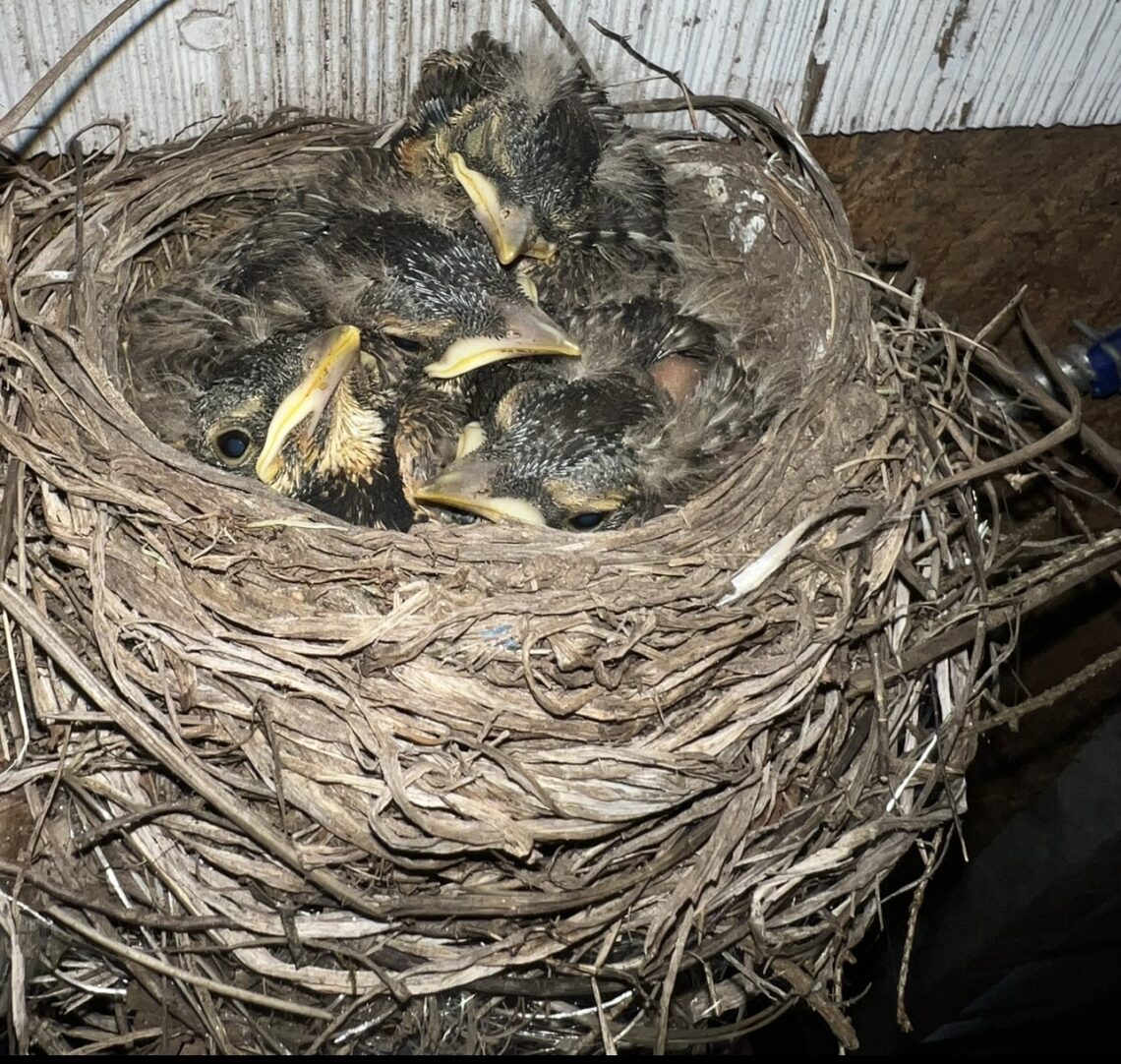
Eggs and those that lay them are harbingers of Spring and the fertile season to come.  For instance, schoolchildren are taught that the sight of a Robin is a sure sign that Spring has actually sprung.  The turquoise-shelled eggs of the Robin have since become such a symbol; the Earth Goddess and the Sun God are back from such a long winter.

The Eostre/Astarte Connection

Eostre is the German goddess of the Spring and dawn and eggs are a predominant symbol for the Rites of Spring.  They are decorated, exchanged, buried or ritually eaten to symbolize the rebirth of Springtime as well as the union with the gods of Spring.  The egg has been a symbol of renewal around the world.

The egg was so special to the Celts that the Druids adopted it as the sacred emblem of the order.  The Hindus have a tale of golden world-egg. The sacred egg of Japan is of a brazen color.  The Chinese paint eggs for their sacred festivals. The Greeks consecrated an egg in a nocturnal ceremony during the Dionysiaca (the mysteries of Bacchus).

To the peoples of Egypt and Syria a great goddess was born form an egg on wondrous size: Astarte.  This egg fell from the heaven and landed in the Euphrates River.  Fish gathered together to push the egg to the riverbank so doves could sit on it and hatch it.  Venus, who later came to be called Astarte by the Syrians was born form this egg.  Astarte, who also lent her name to Easter, took the egg as one of her symbols.  This Mystic Egg had two meanings; one was the “mundane egg”, meaning the egg of the world or the world’s inhabitants.  The other meaning was used by the Church in reference to the ark of the great flood.  In this egg, or ark, the earth’s inhabitants were like a chick enclosed within the shell waiting to be safely hatched.  In the Hebrew language, the egg is called Baitz (masculine) or Baitza (feminine).  In the languages of the Chaldean and the Phoenicians, the word is Baith or Baitha, also meaning “house”.  The Church adopted this mystic egg and the doves of the goddess Astarte along with her name for the purposes of Christ’s resurrection.  They even created a prayer to be used: “Bless, O Lord, we beseech thee, this thy creature of eggs, that is may become a wholesome sustenance unto thy servants, eating it in remembrance of our lord Jesus Christ”.

The Easter/Ostara Connection

Like other Pagan festivals from around the globe, the Spring Equinox celebration was also Christianized.  Yule was used to commemorate Christ’s’ birth and the Vernal Equinox, or Ostara as we now call it, or Easter as the Christians call it, was used to celebrate his resurrection.  At the end of the Middle Ages the day was named Easter after the goddesses Astarte and Eostre.  The day was also given a formula so that it would coincide but not directly fall upon the Vernal Equinox.  Easter Sunday is chosen by an ancient Moon calendar; the fist Sunday after the first Full Moon either on or immediately following the Vernal Equinox.

Why All the Fuss About Eggs Anyway?

The Vernal Equinox is a balance of light and dark because the sun crosses the celestial equator on this day.  Because of the time of the year that they are available and the yolk inside, eggs are symbolic of the Sun and also sacred to such deities as Vulcan and Helios.  Today we can buy eggs at any grocery store any time of the year, but this was not the case for our Pagan ancestors.  Foods were seasonal and eggs were no exception.  The retina of a hen’s eyes need more than twelve hours of light stimulation for the hen to lay eggs.  The retina is the part of the eye that captures both light an images and when the retina ceases to get enough light stimulation, she stops laying eggs for that year.  Fire was not a strong enough light source to fool the hen’s eye so humans only had eggs for one half of the year; starting to lay eggs at the Vernal Equinox and ceasing Autumnal Equinox.  The Vernal Equinox is a celebration of life renewed while the Autumnal Equinox is associated with such themes as death and dying.  Therefore, as the world bloomed and greened, the egg became a natural symbol for renewed life.

The Origin of the Easter Bunny

It is so common these days, you find it everywhere; pastel colored baskets, fake grass and plastic eggs or dye kits.  But where do Easter Baskets and the Easter Bunny come from anyway?  What do they have to do with Christ dying and rising form the dead?

The answer is really nothing; it is yet another Pagan practice that has been adopted by  and added to the new religion.  The root of the Easter Bunny and the Easter Basket is actually in Eostre, the Pagan goddess for which the holiday Ostara is named.

The basket that the Easter Bunny uses to deliver the eggs and treats to children is steeped in Pagan symbolism as well.  The very first baskets that mankind used may have been inspired by nature; watching birds weaving their nests.  The basket is also symbol of life renewed at Spring.  It is a form of the chalice or cauldron; the fertile womb of the Mother Earth Goddess where male and female meets and unites to create new life.  The Hare or Easter Bunny is also a symbol of rebirth (resurrection) and was the sacred totem of many Moon goddesses including Eostre.

As the story goes, the Easter Bunny came to be from one hare in particular.  He wanted to give a gift to the Goddess, but what could a hare give to a Goddess?  After all, she can have anything that she could ever want, right?  But, one day while foraging around for something to eat other than dried grasses; the hare came across a fresh egg.  Hungry, the hare wanted to eat it, but thought better of it so he could give it to the Goddess instead.  The hare decided to make this egg extra special so it would be fit for a Goddess and began to decorate it in symbols and colors of the woods and fields that Eostre’s animals lived in.  Once he felt is was a fit offering, he gave it to Eostre and she was so pleased with this offering that she wanted all of her human children to enjoy it as well.  Since then, that hare’s descendants, Eostre’s Bunnies, or rather Easter Bunnies, have been given the task of delivering treats and decorated eggs to children at springtime.

Egg Decorating: Pysanky

The art of Pysanky is Ukrainian egg decorating that is both beautiful and magickal at the same time.  During the Vernal Equinox, also called Ostara, these naturally dyed eggs are placed in either baskets or bowls after being magickally inscribed so they can be used within the home or to be given away.  Depending upon the designs the Pysanky are powerful amulets for prosperity, fertility or protection.  Their creation is ancient tradition that once was practice solely by women.

The Pysanky also protected the Ukrainian people from a monster that if not kept chained, would devour the entire world.  The monster strains and pulls on the chains throughout the year which weakens the links.  The only thing that keeps him from getting loose is how many Pysanky are created and exchanged during the Vernal Equinox.  The more Pysanky, the stronger the chains.

It wasn’t until 988 CE that the Ukraine accepted Christianity as the official religion.  As in other areas of the world, the people refused to give up their Pagan practices easily.  Eventually, the Church had to assimilate these practices, including the art of Pysanky.  The eggs became known as “Eastern Eggs”, named after Pagan goddess Eostre.  The ancient pagan symbols were reinterpreted and Christian symbols like crosses, steeples and fish from the New Religion were added in.  And the monster that had to be kept chained by the strength of the Pysanky was reinterpreted as well.  No longer did it stand for the need of balance and harmony.  It now represented the Church’s view of the struggle of good over evil.

To create your own Pysanky, you need dye (see below for ideas to create your own dye), a tool called a kitska and beeswax.  A kitska has a pencil-like handle with a tiny metal cup at the end that holds the beeswax but disperses it through a narrow opening.  After the beeswax is poured into the metal cup, it is held over a candle flame to melt the wax.  The wax is used similarly to the method of batik and the kitska is used to draw the design onto the egg.

The word Pysanky is a derivative of the root word “pysati” which means “to write” because signs and symbols are written on the egg’s surface for magickal purposes.  Depending on your purpose you can combine various symbols and colors, creating a powerful talisman that like a fingerprint, no two are alike.  To begin, decide if you are going to use animals, vegetables, geometric shapes or a combination of all three.  For fertility, a man would have been given a Pysanky with a rooster and his wife might have received a Pysanky with eggs drawn upon it.  To protect the home from fire, water designs in shades of blue were drawn on the Pysanky.  For a bountiful harvest, a Pysanky might have wheat inscribed on it.  Curls and spirals were used to bestow divine protection upon the owner of the Pysanky where dots and small circles represented stars which bestowed good luck and success.

If you are not sure where to start, go with the tried and true method of using encircling bands. These represent the birth-life-death-rebirth cycle and where two bands intersect, you create a solar cross which represents the union of opposing forces like spirit and matter or God and Goddess.  Within these bands are geometric designs which also have symbolism; triangles represent the Triple Goddess, squares symbolize the element of Earth, ladders represent the various worlds of planes or even the planes within planes, rakes were used for agriculture and the Sun was represented by either pinwheels (feminine)or eight-pointed stars (masculine, the eight solar Sabbats).  Sometimes the shapes are filled with a cross-hatch of intersecting lines that resembles netting which also represent the solar cross.  Sometimes the symbols are repeated within a band, like triangles which were called “wolf’s teeth” which transformed the egg into a Pysanky of protection, wisdom and strength.  Sometimes the lines and not straight but instead meander.  These usually mean one of two things; fire or water, dependant upon which color you use for the line.

After a design is decided on and the wax is ready, the next step is to begin dying the egg to transform it in the Pysanky.  The dyes for Pysanky are transparent, so you will need to begin with the lightest color and work you way up to the darkest.  For instance, you would work your way through the color spectrum of yellow, then orange, followed by red, then brown, followed by purple or black.  Let’s say you started with yellow; any part of your design that you wish to remain yellow would need to be waxed before moving on to the orange dye.  Then, you would simply repeat this process until you have gone through all of the colors that are in your design.

Once dying is complete, set your oven to about 200 degrees.  Place your egg(s) inside with the oven door cracked slightly and keep watch until the egg(s) look wet.  At this point, the egg(s) can be rubbed with a paper towel to remove the wax and reveal your intricate design.  If you wish, you can finish your egg(s) with glossy varnish.

Like the people of Pagan Ukraine, you can either exchange, give away or keep your Pysanky, depending on your design and what it’s for.  Pysanky with protective symbolism were kept in the home as amulets of protection and proudly displayed throughout the year, not just used as a seasonal decoration.  Because eggs are symbolic of the birth-life-death-rebirth cycle, Pysanky are powerful amulets that help maintain the balance between the light half of the year (starting on the Vernal Equinox) and the dark half of the year (beginning with the Autumnal Equinox).

Egg Decorating: Colors

Today we have commercially dye kits, but it is possible to use the methods of our Pagan ancestors to achieve the same results.  Yellow onion skins will yield a yellow color, a single red onion skin will produce a soft orange and deep rust comes from a handful of onion skins.  Use beet juice to achieve a pink hue.  For a shade of blue; use blueberries for a light blue and red cabbage leaves for a robin’s egg blue.  A half-teaspoon of turmeric produce a sunshine yellow, blackberries will give you lavender, carrots for orange and for the color green use wither spinach or kale.  Additionally, you can use white grapes for a pale yellow, vanilla extract for a yellow-orange, daffodil blossoms for a yellow-green, dandelions for orange, orris root for a rusty-orange, paprika for a brownish-orange, heather for pink, madder root for red, bracken for green, iris blossoms for a pinkish-blue, mulberries for a blue-violet and cayenne for rust.

How can you choose which colors to dye your eggs?  That depends on which symbolism you wish to represent.  For instance, in Asia red-colored eggs are offered at events such as births and funerals due to their connection to birth-life-death-rebirth cycle.  Use yellow to represent the sun, intellect and communication.  Orange is another Sun color that is connected to the third chakra and friendship.  Red is the color of the blood of the Mother Earth Goddess, from which all things are born (the Greek Orthodox Church adopted using red eggs in their Easter Eve service and the Druids had a similar practice).  Another Mother Earth color, green is the color of Spring, Summer and prosperity.  Blue is a color of the Maiden Goddess, peace and healing.  The color of the Crown Chakra, violet is connected to Spirit.  White is an all-purpose color and can substitute for any other color in a pinch.  Brown is the color of the element of Earth and its animals.  The color of the Crone Goddess in Western thinking, black is actually the color of life in Eastern cultures.  For romantic love, use the pastel or “spring” pink.  For the Moon Goddess use silver.  For solar deities or wealth, use gold.

The Easter Egg Hunt

It is thought that the first “Egg Hunts” were done by the hunter-gatherers in the Spring after the sparse Winter.

Keeping with the theme of life renewed, hunting for hidden eggs in India and Asia at springtime was commonplace thousands of years ago.  These cultures believed that each individual was responsible for their own actions and that each of us must find their own path.  Because of their belief in reincarnation and that connection to the egg, the egg-hunt was a time to think about the karmic balance of right and wrong as well as how to improve their position in their next lifetime.  In the eastern culture, the egg hunt represented the soul’s quest for renewal, striving for perfection and ultimately uniting with the Divine.

To the north, those living in the Scandinavian and German regions had a practice offering eggs to the Goddess at Springtime in exchange for a boon.  The Teutons placed eggs under human beds or animal dwellings and in the fields to encourage fertility and abundance (modern-day Pagans still use this practice when tending their magickal gardens).  But, after the rise of Christianity and Pagan practices made illegal, these offerings had to be placed so that only the Goddess could find them.  The authorities were ones who instigated the “egg hunt” and over time it became a children’s game.

It wasn’t until President Abraham Lincoln ordered what we now call the Easter Egg Hunt that this practice came to be commonplace.  In the middle of the Civil War, the Spring of 1862, Lincoln invited the children of Washington DC to come to the White House lawn on Easter morning to search for eggs and popular treats.

Egg Magick & divination

Eggs have been used for magickal purposes because in Metaphysics and Alchemy, they contain all five of the elements of magick; Earth, Air, Fire, Water and Spirit.  The outer shell is representative of Earth, the egg-white represents Water, Air is represented by the membrane that connects the white to the shell, the yellow yolk represents fire and Spirit is represented by the embryo.  Because of this, a simple egg is symbolic of beginnings and endings, birth and rebirth, fertility and death, creativity and stagnation, endless possibilities.  The egg also has planetary associations; the Moon is found in the egg-white and the Sun is found in the Yolk.

The Great Cosmic Egg is a concept that has been passed down fro thousands of years.  For instance the Egyptians had a goose god called Gengenwar and he was given the job of keeping the Greta Cosmic Egg (from which all life sprang) safe.

Adder’s Tongue Spell

The pan-Celts had form of a necklace called the “Adder’s Tongue” (called “ouion anguinum” in Gaulish) which was both a protection amulet as well as a sort of telephone to the spirit world.  Usually made form a snake or adder’s egg (sometimes substituted with a black stone or a seashell), it was worn at the neck by a leather thong.

You can create a modern-day version of the Adder’s Tongue.  Don’t worry if you are fresh out of adder’s egg in you magickal pantry.  You can make a trip to your local arts-and-crafts-store to find what you need.  This time of year, you might even be able to find a bead or a charm in the shape of an egg.  But if not, you may find something that would make a good substitute.  If yours not into having and egg hanging form your neck, perhaps you would like to go with a seashell or a black stone substitution.  Or, you may be able to find a black stone that will rest atop of a shell, that would very nice and no one would have to know that you are wearing a magickal talisman that you created yourself!

Whichever you choose to hang from the leather thong, the next step is to find that part of the necklace.  You may wish to buy this at the   arts-and-crafts-store as well, but you could always buy a pack of leather shoestrings because those will definitely hold up to wear-and-tear.

So, will your Adder’s Tongue necklace be one of protection or one to wear to connect to the Divine?  Perhaps you would like it to serve as both?  Then you can alternate using the following two chants.  Whichever you decide, while you are crafting your necklace, make sure to chant with magickal intent.

Protection From Harm

“Today I create an Adder’s Tongue,

To serve me as a talisman;

This necklace will protect me,

With harm to none, so mote it be.”

Psychic Connection to the Divine

“Today I create an Adder’s Tongue,

To serve me as a talisman;

With it, I connect to Divinity,

With harm to none, so mote it be.”

Here are many more ways that you can use the eggs that are most likely already in your refrigerator:

  • Eggs aren’t just for breakfast and Egg Nog isn’t just for Yule (or Christmas).  Egg drinks and dishes are a popular Spring Equinox treat.  The word “nog” comes from an Old English root word that means “a strong ale”.  It has nothing to do with any particular time of the year, so if you wish to add it to you Ostara celebration, feel free to do so.
  • After been painted with magickal symbols, eggs were either thrown into fires or buried into the soil as an offering to the Mother Earth Goddess.  Sometimes the eggs were painted in the colors of the sun like yellow or gold and then used in rituals to honor the Father Sun God.
  • Eggs can be used to help magickally bring about wishes and desires as they represent surprises and new beginnings.
  • Eggs are buried near cemeteries to instigate reincarnation in places such as the southern Appalachian Mountains and in west-central Africa.
  • Ruled by the element of Water, eggs are a food that is ritually eaten at Ostara to celebrate the return of the Sun and the season of plenty.  This ancient tradition has survived until today including that of an Italian tradition.  Colored hard-boiled eggs are baked into braided bread-nests that look like a wreath or a basket.
  • Springtime (Ostara and Bealtaine) are a perfect time for initiation and eggs are a perfect symbol for the ritual.
  • Springtime is also a time of fertility.  Place a raw egg on your altar as a representation.
  • Also for your altar, a fresh, raw egg can be used as a non-living sacrifice given to the gods.
  • Have you seen trees or bushes in people’s yards decorated with pastel plastic Easter Eggs?  Well, this custom, like so many others has Pagan origins, too.  It originated as the Egg Tree, a form of protection in the Ozarks.  A small and dead bush was chosen, preferably one that was close to the home, and the branches were trimmed down.  Eggshells were emptied by blowing the contents out and then tied to the branches with ribbons.  Over the years, the “tree” would be completely covered with as few as dozens or as many as hundreds of eggshells.
  • In the Tattwas system, the predominantly used symbol for the element of Spirit is that of a black egg-shaped oval.  It represents the birth of the soul as there are may Pagan creation myths that involve the world being born from an egg.  It also represents the re-birth of the souls as eggs are a metaphor for reincarnation.
  • Called oomantia, ovamancy or ooscopy, the ancient art of divination by the use the eggs has been used by nearly every culture to such things as determine the sex of an unborn child or to determine is a person or animal has been afflicted by the Evil Eye.
  • Another practice that surpasses cultures is that of using eggs for the purposes of healing.  Our Pagan ancestors used an unfertilized egg from a black hen.  Nowadays, we have no idea what color the hen was that laid the egg that comes in a container from the grocery store, so you can easily substitute with a brown egg or even a white egg.

Sources:

  • Celtic Myth & Magick: Harnessing the Power of the Gods and Goddesses by Edain McCoy
  • Dancing With the Sun: Celebrating the Seasons of Life by Yasmine Galenorn
  • House Magic: The Good Witch’s Guide to Bringing Grace to Your Space by Ariana
  • Making Magick: What it is and how it works by Edain McCoy
  • Ostara: Customs, Spells & Rituals for the Rites of Spring by Edain McCoy
  • Sticks, Stones, Roots & Bones: Hoodoo, Mojo & Conjuring with Herbs by Stephanie Rose Bird
  • Teen Witch: Wicca For a New Generation by Silver RavenWolf
  • The Two Babylons: or the Papal Worship Proved to be the Worship of Nimrod and His Wife by the Late Rev. Alexander Hislop
  • Wheel of the Year: Living the Magical Life by Pauline Campanelli
  • The Wicca Cookbook: recipes, Ritual and Lore by Jamie Wood and Tara Seefeldt
  • Wicca Craft: The Modern Witch’s Book of Herbs, Magick and Dreams by Gerina Dunwich
  • The Wicca Handbook by Eileen Holland
  • The Wiccan Book of Ceremonies and Ritual by Patricia Telesco
  • The Wicca Spellbook: A Witch’s Collection of Wiccan Spells, Potions and recipes by Gerina Dunwich
  • The Witch Book: The Encyclopedia of Witchcraft, Wicca and Neo-Paganism by Raymond Buckland
  • A Witches Bible Compleat by Janet and Stewart Farrar

Next »