Across the Great Divide

“Innovations in Paranormal Tech”

Put away your proton packs and your PKE Valiance devices. While the theories behind Egon’s famous PKE meter are based on actual parapsychological research, the toys of Hollywood’s Ghostbusters are just that. Out in the real world, however, their influence has been ingeniously innovative, often practical, and sometimes just silly.
Investigative technologies in the field of paranormal research have been adapted, tweaked, modified, and reimagined over the past 100 years to further the quest for that paradigm-shifting piece of evidence that will duct tape the mouths of the skeptics shut.
These tools of the trade have evolved from the days of bulky cassette recorders and 35 mm cameras- which were used primarily to merely document data and present it to the world as valid evidence at face value- to include the latest in Bluetooth and other digital instrumentation.
The various tools of today have rightfully expanded their roles to three core purposes- documentation, communication, and authentication.
Advances in digital photography, for example, have reached a point where it has far surpassed the 35mm film of days gone by. The data encoding that is involved serves as a digital blueprint for authentication because it tracks date, time, geo location, and changes or manipulation of the raw images.
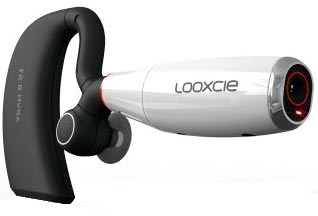
Improvements in camera technology are also well noted in the Looxcie LX2 camcorder, an ear-worn camcorder that utilizes Bluetooth technology to pair with a smartphone or tablet.
As a Point of View (POV) camera, it is simply genius in its design, with wireless capabilities that can be viewed from 15-20ft away. In addition to freeing up the hands for the use of other equipment, the “always on, always ready” feature of wearing it- rather than carrying it- removes the problem of having a personal experience and not being quick enough to get your camera ready to capture the activity.
The newest season of SyFy’s Ghosthunters introduced the GoPro2, a camera converted to film in the IR range. Also, the ability of the new “full spectrum” cameras that capture visible light, ultraviolet, and infrared spectrums are just now reaching a level that will blow the lid off of the amount of potential evidence to be found.
The TAPS team also used an app for Android-based devices- a multimeter based on the “Mel Meter” hardware. The interface features an EMF field sensor, ambient temperature sensor; audio recording capability, an LED torch flashlight, and a camera function all at the fingertips. When the EMF field is interrupted, or the ambient temperature rises or falls, an alarm sounds. Pretty neat; and the all-in-one design cuts down on the number of items you have to carry and switch between.
The app uses an Android’s built in magnetic field reader to accurately measure surroundings. Not all Android phones or devices may have a built-in Ambient Temperature Sensor, but it is great for monitoring the overall room temperature while searching for cold/hot spots.

These are all great in theory, but somehow I doubt that the EMF and ATS capabilities will be anywhere near as accurate as those on a dedicated device; unless you’re able to connect an external microphone, most smartphones are impractical for quality audio recording, let alone valid data; and I’ll admit that I use my phone quite often to take breathtaking photos while out and about, but anyone who has ever used a camera phone knows that the picture quality in low-light conditions common to ghost hunting make its use impractical and hit-and-miss- a problem you can’t afford to have while on an investigation.
I commend the thought behind it, but the TAPS team dropped the ball by promoting this one. It’s just another free geek app that has potential but lacks the hardware behind it to make it scientifically valid. The developer put it best himself, “As with all of my Ghost Hunting apps, please be aware that RESULTS MAY VARY. Neither myself nor anyone else can guarantee contact with ghosts, demons, aliens, or your deceased grandmother.”
Here’s some of the latest tech that has also found its way into ghost hunting investigations:
Everyone is familiar with the ‘flashlight test’. This was an interesting concept that has now reached laughable status thanks to the folks behind the various shows on television which never seemed to get any results; then lo and behold the boys at TAPS had it happen and now they and every other show out there have at least one incident per week. While this does have the potential to produce motivating results, there are so many variables that can leave even the most zealous investigator sarcastically raising an eyebrow.
Well, someone answered the call and created the Paranormal Touch (PT1) to put a dent in those questionable results.
Place the PT1 on any flat surface, turn it on, and a flashing red light is your phone call to the other side. It uses not one, but two vibration detectors to trigger the unit; and has integrated a Negative Static Detector into the unit to provide additional confirmation of paranormal activity.
Then there’s the “paranormal puck,” a device that plugs into a computer’s USB port and uses “ECM,” or “Environmental Communication Mode,” technology to “read” energy levels and translate it into text.
Great, now even ghosts are texting. I guess Verizon really does have the world’s largest network.
Famed researcher Loyd Auerbach is cynical of a dependence solely on technology. He thinks someone with psychic abilities is far likelier to communicate with the other side than someone with a lot of gadgets around their belt.
Auerbach does, however, feel that technology can provide some clues.
Think about how you might track an invisible boat on a big lake.
“We’re really using technology to detect the wake of the boat,” he says. “From that, we can infer that some things are going on in the environment, provided we know there’s a boat there to begin with.”
If there’s a common ground that both skeptics and believers can share, it’s that ghost hunting is often just as complicated as finding an invisible boat. So we set our sights on the horizon and like the seafaring explorers of old, set off to see what’s out there amid the turbulent waters of scientific discovery.

© 2012 R. Wolf Baldassarro/Deep Forest Productions