Notes from the Apothecary: Clematis
Clematis is known as a climbing plant that produces glorious, beautiful blooms in summer. In fact, there are so many types of clematis, many of which bloom in spring and some even in early autumn. Some have petite, pretty flowers, while others produce huge discs of colour. Some grow extremely fast, while others are more ponderous, ideal for small pots in limited space.
Like humans, clematis plants embody diversity. Let’s take a closer look.
The Kitchen Garden
If you’re looking for a tasty addition to a practical kitchen garden, veer away from clematis. Every part of this plant is toxic, and you should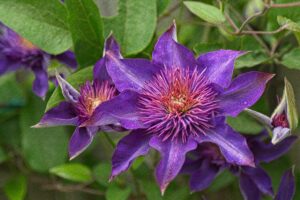 encourage children and pets to stay away from these plants. Wash your hands after planting, pruning, and other handling.
However, there are plenty of other great reasons to have plants like clematis in your garden. For a start, the striking blooms encourage pollinators like bees and butterflies, which will help turn your garden or outdoor space into a wildlife haven and help pollinate other plants.
You can also place clematis with colours in mind. Clematis come in just about every colour imaginable, so you can use them as part of a garden mandala, a particular design theme, or as part of colour magic or witchcraft. You could even plan ahead to gather and dry petals of particular colours after the blooming season has finished.
In January, as I write this, the climbing plants in my garden are mostly dormant. But it’s a good time to start planning for the gardening year ahead. Some established clematis may start blooming by February, while others may need pruning back. New clematis cuttings can be planted as soon as the first frosts have past, depending on the exact species you get. Always follow the advice that comes with your clematis or look up the species/cultivar online to find recommendations.
The Apothecary
Do clematis plants have any medical properties? Creating healing salves and tonics using toxic plants is always a gamble. Don’t attempt it yourself unless qualified.
A species of clematis called wild clematis, virgin’s bower, or lady’s bower (Clematis virginiana) has been indicated in 18th and 19th century herbals as having therapeutic qualities, possibly including anti-inflammatory benefits, and was at one time used in homeopathy.
One notable application mentioned was the use of clematis bark, boiled in oil with wax added, for treating fungal skin infections. The leaves were sometimes used to treat itchy skin (a possible symptom of fungal infections) and leprosy. Taking the plant internally could cause, “…discharge of bile and mucus from the bowels…” which was likely a reaction to the irritating, toxic qualities of the plant.
The Witch’s Kitchen
Clematis plants are fascinating to grow and to see in other people’s gardens. They form natural bowers, or climb up trellises and walks, or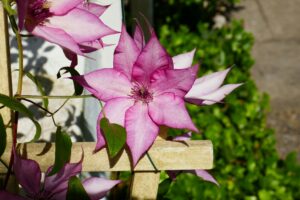 wrap quietly around small cones placed carefully in pots. They adapt to their space yet often try to bust through the boundaries given to them, so savvy gardeners must keep up with pruning and other maintenance to keep them healthy and happy and stop them from taking over the whole garden.
Because there are so many species and cultivars of clematis (literally hundreds!), there are numerous ways for magical practitioners, witches, and spiritual folk to use them. You can dip into the world of colour magic, looking at the correspondences of different petal tones, from positive pink to spiritual purple and even peaceful or water-associated blue.
Remember, different cultures and paths hold different meanings for every colour, so explore what each means on your path or consider learning about colour psychology and how that drives our connection to colour.
Other possible associations for clematis include:
- Persistence
- Adaptability
- The need for structure and boundaries
- Thriving in unlikely situations
- Journeying and travel
- Mischief and playfulness
- Mental alacrity
Some florists associated clematis flowers with love and friendship, due to an oft-repeated connection with the Roman Goddess Venus.
Home and Hearth
If safe to do so, grow clematis around the entryway to your home. With a bit of coaxing, you can train the plant to grow in an arch over the door. Use a trellis or similar structure to help the plant take shape. Every time you leave or come home, take a moment to breathe and remember that you belong in this place and you can handle whatever life throws at you.
I Never Knew…
Clematis have been seen as symbols of good fortune and well-being all over the world, including Italy, Japan, and among indigenous Americans.
…………………………………………………………………………………………………………………………………
About the author…
Mabh Savage is a Pagan author, poet and musician, as well as a freelance journalist and blogger. She’s a nature-based witch, obsessed with Irish and British Paganism and Folklore, plus she’s a massive plant and bird nerd. She’s also a long-time Hekate devotee and a newbie Lokean. She works extensively with the UK Pagan Federation, including editing their bi-annual children’s magazine, Aether. Mabh is a passionate environmentalist and an advocate for inclusiveness and positive social transformation.
Mabh is the author of The Magic of Birds, a beginner’s guide to bird spirituality, symbolism, and many more aspects of everyday magic. She’s also written several other books: A Modern Celt: Seeking the Ancestors, Pagan Portals – Celtic Witchcraft: Modern Witchcraft Meets Celtic Ways, and Practically Pagan: An Alternative Guide to Planet Friendly Living. Search “Mabh Savage” on Spotify and @Mabherick on all socials.
Image credits
Purple clematis blossom photo by Ed G on Unsplash
Pink clematis blossom on a wooden trellis photo by Monika Manenti on Unsplash
Author headshot copyright Mabh Savage, all rights reserved