The Road to Runes: The Blank Rune
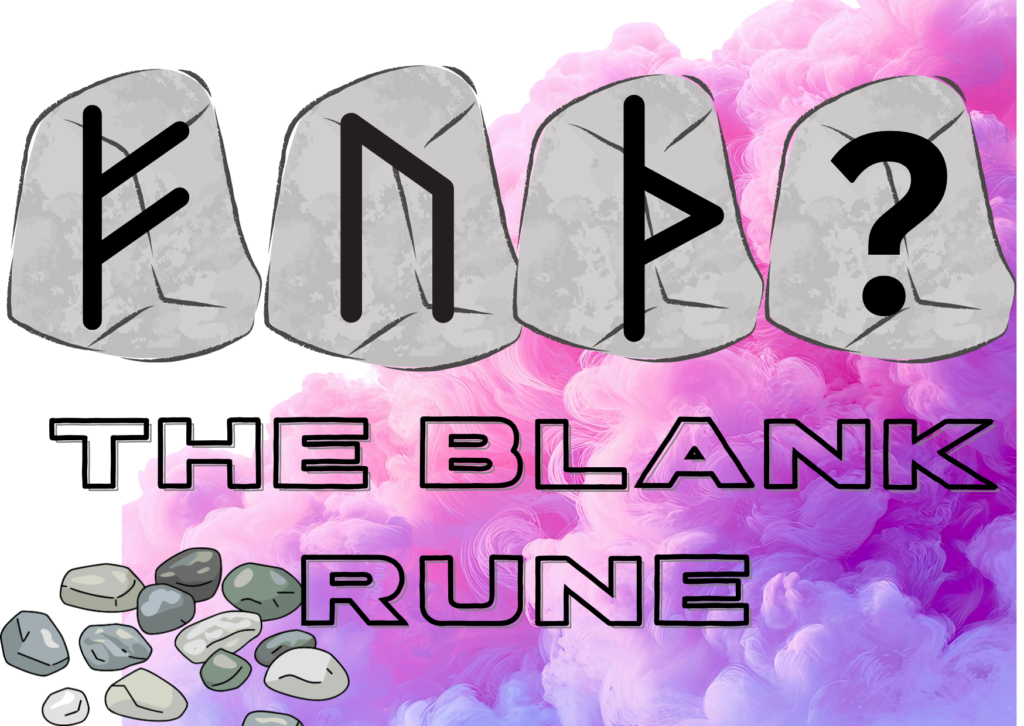
Welcome back to The Road to Runes, gentle ramblings about my own bumpy journey toward learning the runes, their meanings, and using them for divination and personal exploration. The Elder Futhark runes are what most people think of when they consider a set of runes. These runes are 24 “letters” that represent sounds and words, are used in poems that carry potentially great meaning, and are strongly linked to Norse mythology.
Many rune sets include the 24 runes and also a blank rune stone (or piece of wood, or tablet, or whatever the material the runes are made from).
There are a few different thoughts on why the blank rune is included and what it’s for. Let’s take a look.
The Blank Rune as a Messenger of Fate
The addition of the blank rune is entirely modern, and may have been popularized in the early 1980s as rune exploration for spirituality became more common. Today, it’s sometimes called the Wyrd rune, where Wyrd is the Norse concept of fate or destiny.
Some state that the blank rune is Odin’s rune. However, Othala is also associated with Odin, so discernment is recommended when considering whether you’re experiencing a divine connection or not. The blank rune can be seen as a clean slate; an opportunity for you to come up with your own answers, or a sign that you can do as you see fit, because destiny, or Wyrd, is already at work. A higher power, earthly or not, could be active in your life. Or, it could be a sign that your own fate rests right in your hands.
An Opportunity for Bind Runes
When you become confident with the runes, or with the guidance of someone who already is, you may want to have a go at making bind runes. Binding is a common term in many magical practices, but in this case, we’re not necessarily talking about binding a person or an idea. It’s about binding certain runes together, to create something new and potentially powerful.
You could, for example, bind Fehu and Jera together to create a rune focused on wealth and rewards, or the physical or esoteric manifestation of a good harvest. Remember to take into account that you nearly always inadvertently add other runes in when you draw the bind rune. In this example, the straight stave of Fehu is also Isa, a rune associated with stillness and stability, but also stagnation. So, great care is needed when creating bind runes, to ensure that your intentions are actually backed up by the meanings of all the runes present.
The Extraneous Rune
Others believe that there is no real use for the blank rune, and that it is a manufactured device unrelated to deep and meaningful rune magic or divination. The thinking behind this is that the rune is the mark; the letter itself, not what it is written on. After all, you can do a rune reading by writing the Elder Futhark on pieces of paper and drawing them out of a bag. So, what mystical power does the paper itself have, or indeed, a blank rune?
It’s up to you to decide. Let us know in the comments what you think about the blank rune, and if you use it in your own practice.
……………………………………………………………………………………………………..

Mabh Savage is a Pagan author, poet and musician, as well as a freelance journalist and blogger. She’s a nature-based witch, obsessed with Irish and British Paganism and Folklore, plus she’s a massive plant and bird nerd. She’s also a long-time Hekate devotee and a newbie Lokean. She works extensively with the UK Pagan Federation, including editing their bi-annual children’s magazine, Aether. Mabh is a passionate environmentalist and an advocate for inclusiveness and positive social transformation.
Mabh is the author of The Magic of Birds, a beginner’s guide to bird spirituality, symbolism, and many more aspects of everyday magic. She’s also written several other books: A Modern Celt: Seeking the Ancestors, Pagan Portals – Celtic Witchcraft: Modern Witchcraft Meets Celtic Ways, and Practically Pagan: An Alternative Guide to Planet Friendly Living. Search “Mabh Savage” on Spotify and @Mabherick on all socials.
Main image created on Canva by Mabh Savage.


