Book Review – The Tree Horoscope: Discover Your Birth-Tree and Personal Destiny by Daniela Christine Huber
Book Review
The Tree Horoscope: Discover Your Birth-Tree and Personal Destiny
by Daniela Christine Huber
Published by Earthdancer, an Inner Traditions Imprint
144 pages
Published October 19, 2021
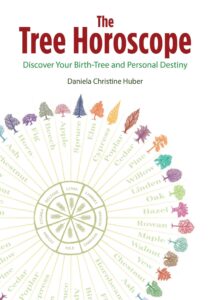
This is quite simply a beautiful little book. Crispy written, easy to read, this book tells you everything you want to know about the Celtic system of tree horoscopes, tree symbolism, and where your destiny resides within this fascinating arrangement.
Published in 2021 by Earthdancer, an Inner Traditions Imprint, The Tree Horoscope: Discover Your Birth Tree and Personal Destiny is written by Daniela Christine Huber. She also has pages on the Inner Traditions Imprint webpage, as well as Simon and Schuster’s page, and other literary pages. According to Simon and Schuster’s page, she grew up on a “remote” farm in Austria and holds degrees in biochemistry and genetic engineering (Simon & Schuster, 1). She is also a gifted photographer, as seen from the beautiful photographs in the book; she did all the photography herself. The book was originally published in Germany in 2015 under the title Welcher Baum ich dich?: Das keltische Horoskop der Lebensb?um; apparently, it sold quite well, prompting its publication in the United States.
Unlike other horoscope systems, such as the Western system that most of us know quite well, or Chinese astrology, which is less well-known but still familiar, the Celtic tree system has only recently become recognizable to many of the masses. This is due, of course, to social media – sites like Facebook and Pinterest and Instagram – just to name a few. Pinterest, in particular, has dozens – if not hundreds – of memes dedicated to the Celtic tree horoscope. I am quite sure that’s where I first heard of this divinatory system.
There are other differences between the three horoscope systems. While the Western and Chinese systems are lunar-based, the Celtic tree system is based on – of course, trees! Naturally, there are major differences between the Western and Chinese lunar systems – I am not going into these differences here, since they don’t really have anything to do with the Celtic Tree system. But the main difference is that the Western system is based upon lunar month and the Chinese system is based upon the lunar year, while the Celtic tree system is based upon the four elements – water, fire, air and earth. So the signs change every ten days. And unlike the other horoscope systems we are more familiar with, some of the signs repeat – for instance, the Horse Chestnut tree is the sign for people born May 15 through 24 but also November 12 through 21. In fact, all the trees repeat once except those trees landing on the four “lesser” Sabbats – Imbolc, Litha, Mabon, and Yule – written in the book here as spring equinox, summer solstice, fall equinox and winter solstice (Huber, 6,7). These trees are Oak, Birch, Olive Tree, and Beech.
I have to admit that I was disappointed that my tree was Horse Chestnut instead of Apple Tree. I personally identify with the apple – it’s my personal symbol – I live in “apple country” – the section of New York State known for its apple orchards – and I love the sight of an apple tree, from the first sign of its blossoming at Beltane to the time of harvest between Litha and Samhain. When I used to hunt deer, I loved hunting along the edge of an apple orchard, because apples are like candy to deer.
But seeing that the Horse Chestnut tree birth dates were both May 15-24 and November 12-21 opened my eyes a bit. My father, who died five years ago this year, was born November 20, and I wanted to be just like him – much more so than my mother – I mean, since I was a girl, it was a given that I would be like my Ma anyway. How could I help it? But I wanted to be cool and strong and always in control like my Daddy. “Horse chestnut personalities are among the most disciplined, ambitious, and grounded in the tree horoscope.” (Huber, 50). That’s my father, for sure!
However, this is me: “…they have a tendency to suppress their indenty, their true emotional nature, for the benefit of others.” (Huber, 52) I have done this my entire life! I am learning how to be my true self – to peel away the pricky exterior and let the shiny chestnut interior be seen.
Starting on page 114, there is a birthday calendar, where you can fill in the birthdays of your family, friends and loved ones; on the opposite page are birthdays of celebrities and quotes of some of these famous people. This makes for fascinating reading, as you can well imagine. Many of the quotes can be used as affirmations.
The rest of the book is dedicated to acknowledgements, a bibliography and a “Recommended Reading” list, and a short biography about the author.
In all, I can’t recommend this book enough. It’s a great little introduction to this fascinating subject; in fact, it only makes me want to find out more about the Celtic Tree horoscope system. I highly recommend The Tree Horoscope: Discover Your Birth Tree and Personal Destiny, by Daniela Christine Huber. You will not regret it!
References.
Huber, Daniela Christine. The Tree Horoscope: Discover Your Birth Tree and Personal Destiny.
Rochester, VT: Earthdancer, an Imprint of Inner Traditions, 2021.
Birth Tree
Simon and Schuster
**
About the Author:
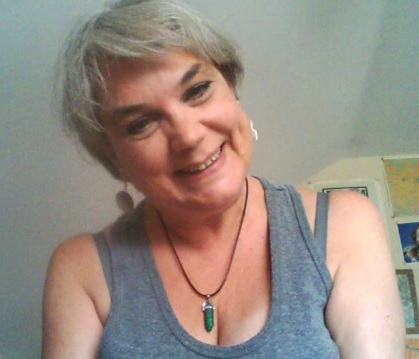
Polly MacDavid lives in Buffalo, New York at the moment but that could easily change, since she is a gypsy at heart. Like a gypsy, she is attracted to the divinatory arts, as well as camp fires and dancing barefoot. She has three cats who all help her with her magic.
Her philosophy about religion and magic is that it must be thoroughly based in science and logic. She is Dianic Wiccan but she gets along with a few of the masculine deities. She loves to cook and she is a Bills fan.
She blogs at silverapplequeen.wordpress.com. She writes about general life, politics and poetry. She is writing a novel about sex, drugs and recovery.


