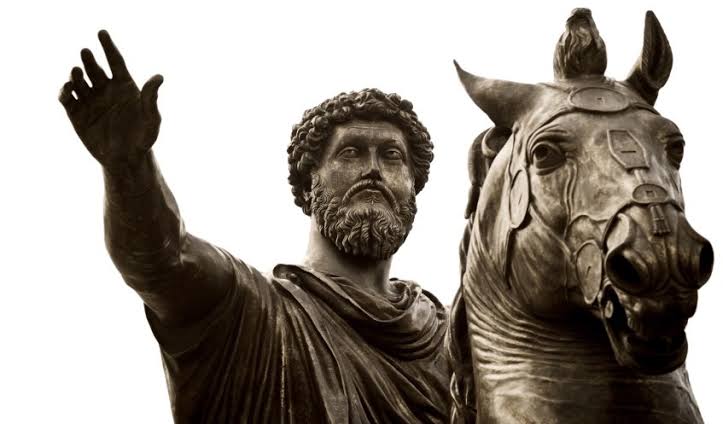
A Stoic Discourse for Modern Pagans, Polytheists, and Magickal Folks
You have power over your mind-not outside events. Realize this, and you will find strength
~Marcus Aurelius, Meditations
Stoicism has gotten its fair share of criticisms throughout history; oft misunderstood as a “stone cold, calculated” philosophy, many believe that Stoics, both ancient and modern, are unfeeling, cold and calculated people. That’s farthest from the truth; Stoics, both now and in the times of Aurelius, Seneca and Epictetus, do most certainly feel and process their feelings, just not in the way that current society expects them to do so. Instead of suppressing those emotions, the modern, and thus, Christian, practice of “turning the other cheek”, we instead remove ourselves (how about you look at both cheeks?), and use reason to work through our impressions (our instant reaction, emotionally, physically and otherwise).
Many magickal folks fall into the deceptive notion that because we have access to natural, preternatural, supernatural and otherwise occult energies, that we can change anything and everything that doesn’t suit us. While a noble, albeit misguided notion, this lacks the perspective of the greater whole; what we want is usually trivial, and in many cases, comes at the harm of another. For instance, money spells are often brought up with this issue, and it’s a valid point. If we’re to behave in any sort of ethical framework, then we must consider these things before doing magick.
Stoicism also asks us to see others as they are-hic et nunc-here and now; the good, the bad, and everything in between. Perhaps they’re suffering from sort of ignorance (either willful or due to lack of knowledge); if it’s amathia, or “intelligent stupidity/ignorance”, then it is truly harmful, and we should use the discourses and dialogues of the ancient philosophers as a guidebook to debating, and ultimately showing, those people the error in their thinking and in their ways.
Stoicism is an ancient philosophy that has as many applications practically and theoretically today, as it did when Zeno founded the school of thought in Athens. For us pagans, it’s part of our spiritual or religious heritage, especially for those of us like myself who are practicing Greco-Roman polytheists, having been formed in the classical manner in Ancient Greece before spreading to Rome. Stoicism carries many applications in our spiritual lives, too, as the philosophy is open to any and all beliefs regarding divinity-even atheism (despite the original Stoics being pantheists)! Magickally, it can help us step back in moments of intense emotion, and stop ourselves from acting rashly or out of haste. This is going to be a crash course on Stoicism, as well as how we can apply it to our lives in all facets-spiritually, magickally, and our everyday, mundane lives. Let’s get started, shall we?
The Dichotomy of Control
Some things are in our control and others not. Things in our control are opinions, pursuit, desire, aversion, and, in a word, whatever are our own actions. Things not in our control are body, property, reputation, command, and, in one word, whatever are not our actions
~Epictetus
Control is something every human being craves; it gives us a sense of certainty in a world that’s ever-changing. Control, according to Stoics, actually controls us. We mustn’t fret over those things which are outside of our control-what others say or think about us, political happenings (until protest and voting time), the person who cut you off on the highway, and so many other things, are, simply put, out of our control. What we can control, however is, our reaction to those events.
Say that your partner says something really mean to you, and you’re deeply hurt by that; we could, for instance, lash out, say something nasty in return, and continue the loop of arguing and pain. Or, we could remove ourselves, work through those impressions (feelings, reactions, in the Stoic sense of the word), and allow reason to triumph, ultimately leading us to come back with a cooler head, and address the issue of being hurt via your partner, and then, onto any underlying issues in the relationship. Reason begets reason, and reason is the way to solve these kinds of problems; I’m not saying to be cold, callous and totally detached, but, we need to be dispassionate (removed from our emotions, thoughts and reactions of anger, etc) to correctly and effectively communicate our needs, feelings and (hopefully) come to a peaceful resolution.
What other things are outside of your control? Is there a way to change it, that doesn’t resort to magick? If magick can help, what are the limits of that magick, of yourself, and of any real probability that that magick will work. Stoicism is a path and philosophy that demands honesty (to yourself, about yourself), and honesty isn’t always what we want to hear.
Amathia, Agnoia, and Compassion
As long as you live, keep learning how to live
~Seneca
Amathia, as previously discussed, is a willful lack of learning, a type of “intelligent stupidity”. In other words, one knows that one is wrong in doing or saying something, supporting or believing it to be truth. Many examples of this come to mind, especially in the U.S., which is experiencing a saddening increase in amathia: MAGA, Christian Nationalists, Islamic Extremists, Zionists Sexists, Homophobes and the like. I would also group factions of leftists in this group, as propaganda is worsening all the divides in this country, to which, admittedly, I was once part of (I still stick to my leftist ideology, but refuse to take part in group think, instead embracing Stoic values to conclude what stays and what goes, in terms of my political beliefs). Stoics, contrary to popular belief, actually believe in having compassion (not pity) for these people. In these peoples’ misguided attempts to cling to illogical, false and downright harmful beliefs, action and presumptions, they have thus gone against the natural order, or logos. As humans are the only animal capable of reason to the extent that we are, we go against our own nature and the nature of our kin, every time we act out of amathia.
Agnoia, by contrast, is, simply put, ignorance; whether due to lack of access to information, or simply not having been faced with such issue(s), one knows not the natural order, and thus acts out of concert with it. In other words, they don’t know any better. Stoics don’t generally believe in pity, but if we were to pity a group, it would be those experiencing agnoia. Compassion, however, is something that real Stoics work to cultivate, especially when faced with persons experiencing amathia or agnoia. Our goal as Stoics, then, is to educate through dialogue and questioning, not belittling; what good does insulting and belittling another do? None. It keeps the loop of suffering and lack of reason moving, the contrary to what we’re attempting to accomplish.
Compassion, however, does not mean allowing those suffering from amathia to continue to harm others via their actions that are out of line with logos. In the case of MAGA, yes, it is an extreme case of amathia, but, Stoics see the challenge as the way. How can you challenge these folks to see the err in their thinking? Reason and logic; emotions charge our arguments and thus turn away any listening ear that was willing to hear you out in the beginning. You can feel while employing logic and reasoning, as Stoics, and I myself, a newly founded Stoic, would argue that compassion in this instance is holding back those impressions of anger, and instead leading with the mind. Will many of them change their ways? Probably not, but even one person changing their ways is an impact, and one worth making.
Addendum: in discussion with my brother after sharing this article with him, he pointed out a shortsightedness on my part, an instance of amathia based on certain biases I myself carry. As it should be clear by now, I have more than enough of a disagreement with christianity, and Evangelism specifically. However, my shortsightedness came in the form of generalizing a whole group for the radicals it contains, and neglecting other religious groups who have done their fair share of actions out of amathia; for instance, Al-Qaeda, ISIS, and the oppressive Ayatollah Regime of Iran are examples of Islam’s extremist problem. The Zionists, who have taken power via Netanyahu in Israel, are a major problem within Judaism, with orthodox Jews condemning the views themselves and the actions that they’ve created. To be clear, my brother is a born-again christian, but he’s not so ardent to not see arguments of the hypocrisy that others of his religion present. He himself lives very true to his beliefs, having food to offer the homeless folks on hand at all times, as he lives in the Los Angeles Metropolitan area, which has a huge homelessness problem, being one example of many I could list.
Pagans, too, suffer from amathia; not all, not even most, at least in an extremism sense. However, where amathia is heavily present in our communities is the meaningless, petty witch wars and outcasting, myself having experienced this. We’re all imperfect, no matter what group or groups we belong to. The best we can do is live virtuously and with the humility to change our views when presented with a logical argument, take accountability for any wrongs done via that amathia, and work on our virtue more.
This act of “calling myself out” publicly is not done to shame myself, but to make necessary corrections in this piece, and also to demonstrate what being a Stoic looks like in practice. As I said previously in this article, Stoicism demands honesty and accountability-with ourselves and to ourselves. I would be remiss to write on Stoic virtues and claim to be a Stoic myself, without calling myself out for not exemplifying them. That’s an area of growth I’ll continue to work on, and most likely will be the seed of another article on Stoicism.
As I’ve added this addendum to this section, I also have made changes to the original wording; I removed “christianity” and it is thus changed to “christian nationalists”, and added Islamic Extremists, and Zionists, to name the prevalent amathia groups out of the three dominant religions in the world. I could even include certain factions of feminists, commonly referred to as “femi-nazis”, but I think listing anymore, from either side, is redundant, as my point should be clear. I hope anyone looking to practice Stoicism looks at this as an example of modern-day Stoicism. And I hope any who were offended by my amathia are able to accept my apologies.
Ad astra per aspera
Dii Propitii
Agapé, Sophia, and Our Connection to Others
We suffer more often in imagination than in reality
~Seneca
Agapé, simply put, is the love of all others, a divine love, if you will. Christians, of course, see this as God’s love, but Stoics see it as something different; enter Sympatheia: this is the idea of a cosmic bond tying us all together, signaling a duty of loving others. Agapé is an intentional act of (good) will, and it is a Stoic duty. Compassion doesn’t meant excusing bad behavior, nor does it mean agreeing with or condoning someone’s beliefs, behavior or other dispreferred indifferents (those things beyond our control which we tend to not want, like or desire). What it does mean, however, is that we need to see those with incorrect reason, or, as mentioned previously, amathia or agnoia. Agapé to these individuals can look like a (civil) debate, a dialogue discussing those ideas; it can also look like removing yourself from that person, for whatever duration. Stoics embrace obstacles and challenges, but that does not mean we tolerate abusive behavior, or that which harms the natural order as a whole.
Sophia, the opposite of amathia or agnoia, is simply wisdom, one of the four Stoic virtues: Wisdom, Justice, Courage and Temperance. Sophia isn’t wisdom for wisdoms’ sake, rather, it’s the wisdom we carry within ourselves, and the wisdom to act in accordance with nature, or logos, the pantheistic idea of divinity being prevalent in the natural world. Sophia, in the Stoic sense, also relates to the wisdom of discernment; what I mean by this is, know when it’s appropriate to take action, make impressions known, and the like. It can also mean inaction when reason calls for it. Our connection to others is part of what makes humanity so different from any other animal, as well as our ability to form language with nuanced meanings, and even reason itself, sets us apart from other animals, including other primates. Stoics view connection to others as essential; not only does it test our understanding of the philosophy, and can enhance our practice of it, but it’s a fundamental part of the cosmology of the Stoic. Think of it as interacting with the Universe via interactions with people. We’re all part of the logos. Sophia is a complex topic, especially in Stoicism, and so, I will revert the reader to some sources that have helped me on my journey of becoming a Stoic.
Stoicism Complimenting Paganism, Polytheism and the Occult
Wealth consists not in having great possessions, but in having few wants
~Epictetus
By now we’ve established Stoicism’s main tenets, and even how to work with these concepts in our lives, daily. Now, let’s take a look at how Stoicism interacts with Magick and Polytheism. Stoicism, as an ancient philosophy, undoubtedly had an impact on the Occult as we know it. Hermeticism takes ideas and concepts from Stoicism, and makes them more occult, more mystical, then what your secular Stoic would prefer. I won’t get into the philosophical caveats of it all, and will instead refer you to classical texts on Hermeticism, such as the Emerald Tablets and PGM. Another good source of connecting these dots would be the Kybalion.
Occult philosophy and ethical philosophy typically aren’t seen as compatible, but I think that’s malarkey. How did Occultism get its philosophy, other than magickal practice and secrets passed down through the ages? You guessed it! Classical Philosophy!
From Neo-Platonism, Stoicism, Cynicism and even Epicureanism, the occult in all its different varieties, borrows generously from these philosophies. Instead of getting into the how, why and my observations with that specific topic, I’ll again leave the reader to find these things out on their own, as I’m already at 1800 words and still have more I’d like to discuss.
Looking at Stoicism’s application to Polytheism, which is a religious aspect of my practice, we can see that the ideas within Stoicism align very well with Greco-Roman polytheism, for obvious reasons. How then, can it apply to other pantheons, say the Celts, or Egyptians? Stoicism isn’t bound to one belief system, God or Gods; it’s for everyone, just as knowledge and reason are (the true Stoic is coming out in me now). Do you think Rhiannon, for instance, wants you to keep living in amathia or agnoia? Chances are, any deity doesn’t; Stoicism can align us with the truth of ourselves, and the universe, however we may conceive of it. Again, knowledge, wisdom, reason, philosophy, and most certainly Stoicism, are for everyone.
As for magickal pursuits, I have one question that I’ll pose to each of you: is your magickal intent in line with the logos?
Meaning: does the intention or ritual I’m planning align with the natural order? Does it cause harm to another, even if unintentional? Who benefits, and who experiences a loss? Stoicism asks us to think deeper, dispassionately, about everything. I’ve found myself giving up a few rituals I thought were appropriate, simply because I was doing so more out of a rash state of mind, than a calm, cool and collected one. The idea of waiting three days before cursing, something I’ve preached for a while, is in itself a Stoic ideal: giving ourselves time to cool down, think, use reason, and decide the best course of action. Our (first) impressions of the situation are likely alleviated (especially if it’s anger), and we are then able to move forward with a clear mind, and a clear plan of what to do.
I’m attaching an image of the Four Stoic Virtues as reference for this article below; this is by no means exhaustive (nor is this article), but it is a helpful visual aid for embodying this philosophy and practicing it day-to-day. Of course, a further exploration of the philosophy is needed for those looking to practice it truly, as I have begun doing (with good results thus far, I might add).

Spiritual and Magickal Ways to Embrace Stoicism
Now that we’ve gone over some of the basics, let’s get into how you can spiritually embody Stoicism. First, it’s important to know that Stoicism started in Athens; Athena (Minerva) is the goddess of wisdom, and Athens, her namesake city. Athena (Minerva) then, can be seen as a matron deity of Stoicism, especially the virtue of wisdom. As for justice, not so much in the sense of our usage of the word, but acting rightly, and in accordance with the natural order, two deities come into focus: Themis (when dealing with actual legal issues), but also, Zeus (Jupiter). Zeus was used interchangeably with logos to describe the sentient, orderly way of nature. In this line of thinking, Zeus (Jupiter) is most definitely a patron deity of Stoicism.
As for courage, I will say again that Athena (Minerva) is an excellent deity to ask for help with this virtue, but also, Ares (Mars), whom I usually invoke as Mars Pater, the fatherly embodiment of Mars. Courage to act correctly, even in the face of adversity, and to question yourself, others, and the world around you. Certainly, Athena fits this mold; Mars Pater however, can be called upon as a fatherly figure, who will help you keep your nose to grindstone in understanding and implementing this ancient, wonderful philosophy.
And lastly, the virtue of moderation, Athena again pops up (I believe she led me to Stoicism, in fact), as does Hygeia. Athena, at this point in our conversation, is clear. Hygeia, however, appears to me as the Stoic embodiment of “nothing in excess”. Why, you may ask? Well, excess alcohol, drugs (even cannabis), food, or really anything, distracts us from living in accordance with logos, and, is bad for our health-mentally, physically and spiritually. I’m not saying (and certainly Zeno, Epictetus, Seneca and even Aurelius) that you can’t enjoy a drink, a joint, or some good food. What is important here, however, is that we do not go overboard. This should be plainly clear, given the idea of temperance/moderation, but I’m sure there’s someone who may need a refresher.
Symbolically, I associate Stoicism with (not unsurprisingly) the Owl. Not only is this bird of prey sacred to Athena (Minerva), but it also symbolizes wisdom, a core virtue, as well as seeing clearly, even in the dark, when things are obfuscated. Another symbol is the pillar, reminding us of our foundations, and the natural order holding us, and the universe, together. Laurels, lions, scales, crows/ravens and even bulls are other animal associations, for all their varying lessons. As I write this, I’m wearing one of two Owl pendants I own, this one, a barn owl holding a Pentacle under its two feet.
Closing Thoughts and Recommended Resources
A rather lengthy and involved article, and I do apologize for giving anyone a headache. Go take some aspirin or whatever painkiller is best for you, relax, and take a few deep breaths. If you want to be a Stoic, I’ve got some great resources I’ll recommend at the end of this article. First, I’d like to make some closing notes for the aspiring Stoic.
Firstly, Stoicism is open to debate and revision; there is no set dogma, but we do stand by our virtues. Anything that compromises those, is ultimately unworthy of our time, and sets apart further from logos. Secondly, Stoicism is not suppressing emotions, or bottling them up, and acting calm and collected on the surface. No, Stoicism instead is facing those emotions (impressions) and working through them logically, often arriving at a more desirable outcome. Remember the things you can control, and those you can’t. Third, Stoicism does require reading and study of its essential texts, for obvious reason. The beauty in this is that most Stoic texts are more like books of sayings and guidelines, not novels or textbooks.
Lastly, Stoicism is a philosophy that’s best lived instead of studied. Practice makes perfect, and you certainly won’t be a Stoic Sage instantly. It takes time, effort, devotion and practice, along with a little reading (okay, maybe a lot of reading, but it’s worth it). Below, I’ll give a short list of those recommended texts so you can better familiarize yourself with this ancient yet pertinent philosophy.
Recommended Reading
How To Be A Stoic: Using Ancient Philosophy to Live a Modern Life by Massimo Pigliucci
Meditations by Marcus Aurelius
The Enchiridion by Epictetus
Letters from a Stoic by Seneca
On The Shortness of Life by Seneca
***
Author Bio:

The Modern Merlin is a Stoic, Polytheist Pagan, Animist, Witch, Sorcerer, Paranormal Investigator, Amateur Folklorist, and Occultist. He embarked on his spiritual and magickal journey over 15 years ago. As such, he has extensive knowledge of The Occult, Ceremonial Magick, Chaos Magick, Witchcraft, Sorcery, and both modern and ancient world religions and folklore. He is a practicing Sorcerer, blending ceremonial high magick, chaos magick and witchcraft, as well as plant medicine, poisonous plants and entheogens, shamanic techniques, and mysticism. He venerates and casts magick with a wide array of spirits and deities, and works with both the Left and Right Hand Paths, having experience in both. He has also studied eastern philosophies such as Taoism, Zen Buddhism, and Hinduism. He is an Astrologer and Tarot reader and actively studies and practices many other forms of divination including Runes, Ogham, Palmistry, Lenormand and Scrying. An animal and nature lover, he sees divinity in nature-the trees, plants, animals and sky. Also an avid reader, you’re hard pressed to not find him nose deep in a book, most likely on an occult, mystical, religious or magickal subject. He is the Co-Editor of PaganPages.Org and the author of multiple columns for PaganPages.Org. He gives readings and other spiritual services through his Facebook Page, The Modern Merlin, as well other free informational posts for everyone to see! You can reach him on Facebook, or e-mail him at [email protected]