Art & Academia for June: An Ancient City older than Mesopotamia, Faerie Tale Theatre, & Salem Mass
It’s been a while, apologies! As many of you might be able to relate, I’ve found it so difficult to do much of anything due to the state of the world. Art & Academia is (what should be) a monthly article I write from curated art and academic topics that either directly relate to the pagan/witchy community or relate in the sense that I think the community would enjoy it. Since I love almost all forms of art and academia, I thought it would be fun to share with the world some of the pieces I discovered so we can all embrace our inner Renaissance Man.
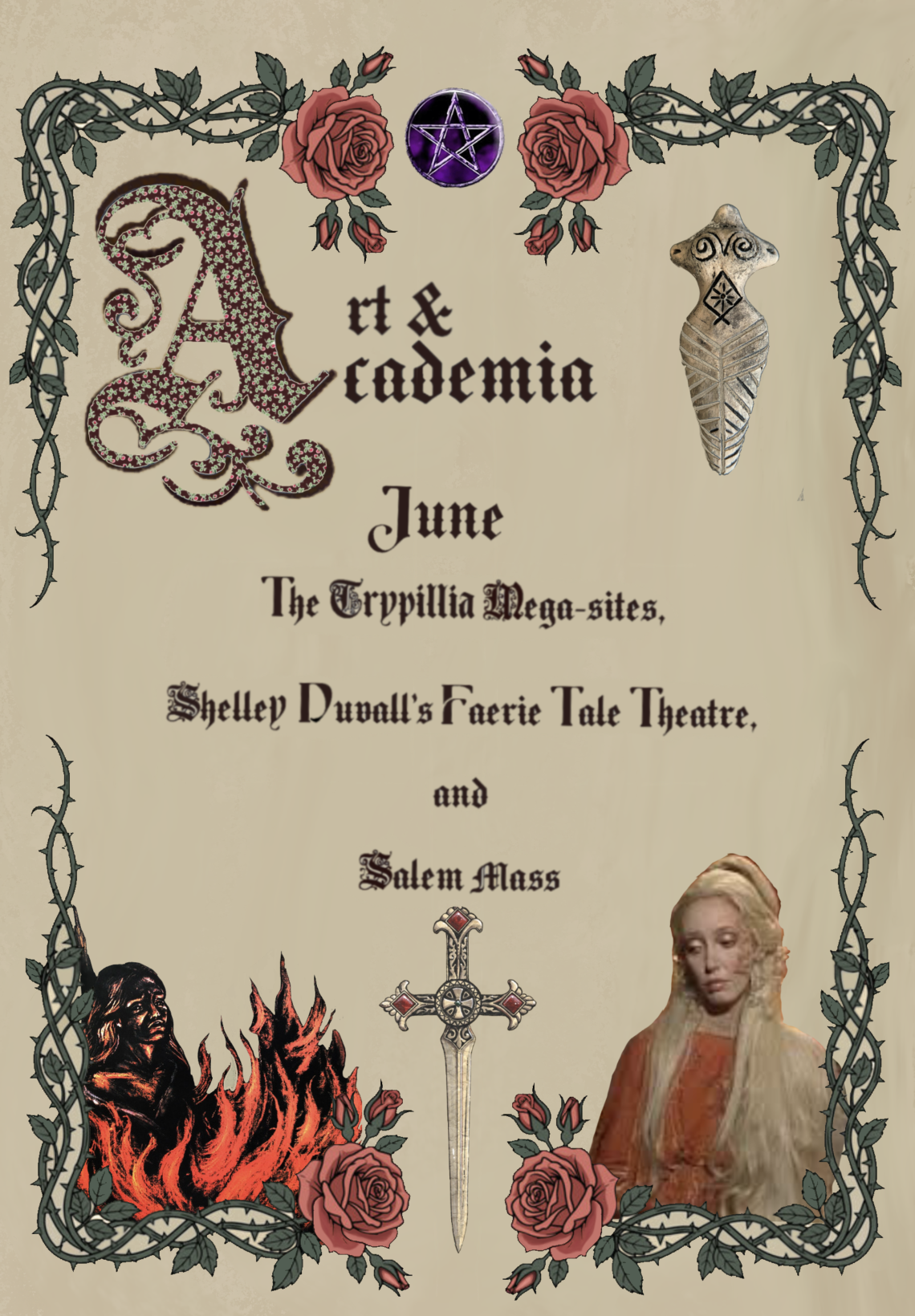
For the month of June, I bring to you three very different categories: Archeology & Anthropology: An Ancient City older than Mesopotamia- The Trypillia Megasites, Cinema: Shelley Duvall’s Faerie Tale Theatre, and Music: Salem Mass
Archeology & Anthropology
An Ancient City older than Mesopotamia: The Trypillia Mega-sites
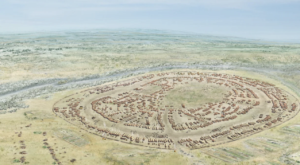
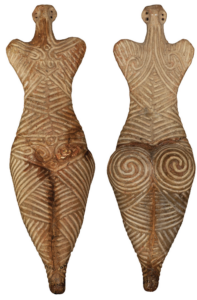
The Trypillia megasites, located in the forest steppe zone North of the Black Sea in modern-day Ukraine and Moldova, are the largest known settlements in the 4th millennium BC Europe, and possibly the world, which emerged centuries before the Mesopotamia Uruk complex. Archeological evidence suggest they likely practiced a nature-centered spirituality or religion, ancestor ceremonies, fertility rituals, agriculture ritual, and possibly worshiped a Mother Goddess based on the thousands of figurines depicting women.
The largest of these sites reached up to 320 hectares. They are incredibly significant because they represent some of the earliest known examples of cities and low-density urbanism, emerging around one millennium after the Neolithic agriculture revolution. Their unprecedented size and scale on the Eurasian continent during the 5th and 4th millennia BC make them a unique phenomenon in early human history. They successfully integrated large populations through unique concentric planning, immense public open spaces, and extensive inter-regional exchange networks without developing the strict hierarchical state structures or authoritarian control seen in other early cities.
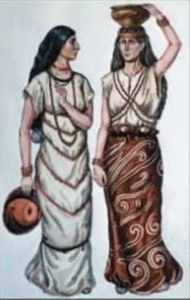
The people who built these sites belonged to the Cucuteni-Trypillia cultural group, consisting of early agro-pastoral communities, or “first farer,” who cultivated the highly fertile local chernozem soils. Rather than being an elite-driven society, they were highly egalitarian and actively resisted the accumulation of wealth and social differentiation, which is evidenced by their lack of prestige burials and hoards. Researchers propose several models for how they lived in these massive sites, challenging the traditional “maximalist” view of permanent populations of tens of thousands. Instead, these sites may have functioned through “Distributed Governance” (where different regional clans took turns managing the site year-round), as seasonal “Assembly” places for month-long gatherings, or as “Pilgrimage” centers occupied by permanent ritual leaders who hosted visitors over an eight-month season. Regardless of the exact model, they relied on extensive exchange networks to acquire essential and exotic goods like high-quality flint, copper, and pigments, and they utilized the immense “Inner Open Areas” of their settlements for open, consensus-based political decision-making.
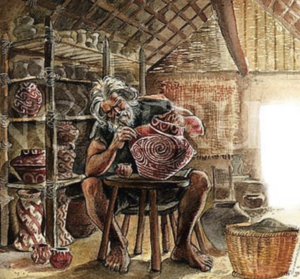
Their religious and pagan practices were rooted in a shared symbolic system known as the “Trypillia Big Other,” which was materialized in their daily routines, houses, painted pottery, and figurines. A central element of their religion was the cult of fire, which was practiced using elaborate clay alters. These altars, most commonly built in a cruciform (cross) shape, were placed both in everyday domestic dwellings and inside massive public sanctuaries, such as the two-story Nebelivka Temple were perfectly aligned with specific equinoxes and solstices to capture the movement of the Sun and Moon. Their rituals were highly diverse, and sometimes involved the deliberate, ceremonial burning of their own houses to create “ancestral spaces”. Other documented practices included baking sacred bread form ritually ground grain, burning incense on miniature portable altars, and occasionally burying purposefully broken anthropomorphic female figurines beneath their altars as a form of sacrifice intended to magically transfer life-giving power.
Sources:
Chapman, J., Gaydarska, B., & Nebbia, M. (2019). The origins of Trypillia megasites. Frontiers in Digital Humanities, 6, Article 10. https://doi.org/10.3389/fdigh.2019.00010
Zavalii, O. (2024). “Trypillian altars” as a religious phenomenon of the ancient world. Open Journal of Philosophy, 14(2), 261-302. https://doi.org/10.4236/ojpp.2024.142019
Gaydarska, B., Millard, A., Buchanan, B., & Chapman, J. (2023). Place and time at Trypillia mega-sites: Towards a new synthesis of analyses and social theory. Journal of Urban Archaeology, 7, 115-145. https://doi.org/10.1484/J.JUA.5.133453
 Cinema
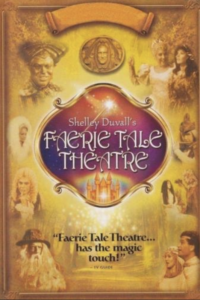
Shelley Duvall’s Faerie Tale Theatre
I’ve always loved fairy tales and the magic of storytelling. Some I’ve experienced only in my imagination as my grandmother told them to me before bed, others came from beautifully illustrated books, and some I discovered through films. As a child, I never really thought about where these stories originated. I assumed characters like Aladdin belonged to Disney rather than a much older tradition of folklore and oral storytelling.
For years, bits of Faerie Tale Theatre passed through my memories, but I couldn’t quite remember it. The episode that really haunted me most was The Twelve Dancing Princesses. I knew I had seen a live-action adaptation as a child, yet I couldn’t find a movie or show anywhere. Then one day I stumbled upon Faerie Tale Theatre again, and suddenly decades-old memories came flooding back.
Created by actress Shelley Duvall in 1982, Faerie Tale Theatre is an anthology series that adapts classic fairy tales into live-action productions. The show is for all ages; it’s not too explicit for children but not too childish for adults. If you enjoy a fantasy-core and an aesthetic with princes, princesses, knights, wizards, and magic presented in a theatrical way, this is the perfect cozy show for you!
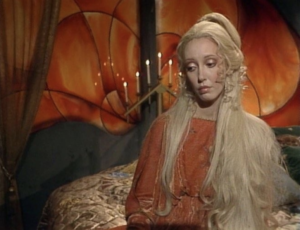
As the title describes, Faerie Tale Theatre, the show is presented in a theatrical-artistic form. The painted backdrops, exaggerated performances, visible stagecraft, and handmade quality are all so perfectly theatrical. This may come off as a theatre production done by a bunch of middle-aged friends, because it is! I’ve read a few reviews before writing my own, and the “it came off as a school play” was a common negative review. To me, that criticism completely misses the point. I acknowledge budget is a factor, but I think many people aren’t picking up on the fact that it’s MEANT to be like a play, hence the “Theare” in its name. I think Shelley Duvall had a vision and she perfectly executed it. Everything about it is intentional.
Other criticism I read had to do with applying modern social standards, so I don’t feel that they’re too relevant. Even then, Duvall took some modern artistic liberties which included redefining the villains, most of whom were women, and giving them a backstory as to why they were villains. What makes Faerie Tale Theatre special is that it treats fairy tales with respect while still allowing room for humor and creativity. Some episodes remain true to traditional versions, while others reinterpret the source material in fun or unexpected ways.
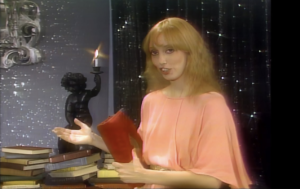
Duvall spent years collecting antique fairy tale books before creating the series. She viewed fairy tales not merely as children’s entertainment but as timeless stories that taught lessons about human nature. More importantly, she wanted each episode to resemble the work of classic storybook illustrators. Rather than building a single fantasy aesthetic, every production drew inspiration from different artists. The dreamy colors of Maxfield Parrish influenced The Frog Prince, while Hansel and Gretel borrowed from the eerie forests of Arthur Rackham. The result is a series that often feels less like television and more like stepping inside an old storybook.
The production itself was surprisingly ambitious. Despite a relatively modest budget of about $350,000 and two week production schedules, Duvall managed to attract an astonishing roster of talent. Actors such as Robin Williams, Jeff Bridges, Susan Sarandon, Christopher Reeve, Mick Jagger, Joan Collins, and many others appeared throughout the series. Many accepted reduced salaries because they believed in the project and shared in its eventual profits. By all accounts, the atmosphere was collaborative and playful rather than corporate.
Another fascinating aspect of the show is its use of early video technology. Today, audiences are accustomed to digital effects, but Faerie Tale Theatre was experimenting with advanced compositing techniques decades ago. The production used an early chroma key system called Ultimatte to create oversized giants, tiny frogs, painted fantasy landscapes, and impossible fairy tale environments. Rather than hiding the artificiality, the effects contributed to the dreamlike atmosphere.
Ultimately, I think Faerie Tale Theatre succeeds because it understands something modern cinema often neglect: imagination. Oral storytelling and reading are more pure forms of imaginative crafting, but the painted sets, theatrical acting, practical effects, and obvious artifice still allows the viewer’s imagination fill the gaps.
For me, the series feels like discovering a forgotten storybook hidden in an attic. It is cozy, strange, imperfect, whimsical, and deeply sincere. In an age obsessed with producing and consuming massive amounts of media, the artistic aspects often get left behind. It’s good to appreciate different forms of cinema.
Perhaps that’s why it remains a cult classic more than forty years later.
I got much of my source material from Shelley Duvall Archive
Music
Salem Mass
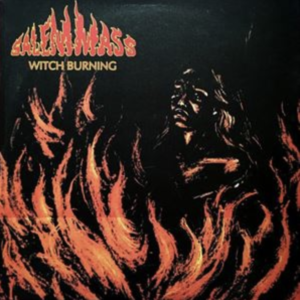
On my quest to find and support local or independent artists, I discovered a witchy rock band called Salem Mass! I love the word play on the name, it could mean Salem Massachusetts, or does the mass mean a church mass? It’s clearly meant as a homage to the Salem witch trials. Anyways, though new to me, this band was rockin’ in the 70s. Salem Mass is an American psychedelic/prog rock band. They released only one 7 track album “Witch Burning”, in 1971. Band members include Jim Klahr (keyboards), Mike Snead (guitar, vocals), Steve Towery (drums, vocals), Matt Wilson (bass, vocals). Despite the name, the band was based in Caldwell, Idaho and played mostly in the northwest US. The band was well-known in cult rock circles for its heavy use of the Moog synthesizer (one of the first bands to use this instrument, serial number 23) and occult themed music.
I thought this album was really good, so I wondered why they don’t have more. I looked up the band members to see what they did since, and here is what I found:
Jim Klahr (keyboards)
American keyboardist, small-business owner, marijuana legalization advocate, and politician. Born 5 November 1951 in the small town of Beeville, Texas and grew up in Caldwell, Idaho. Died 9 November 2014 in Portland, Oregon, Obituary. After the band dissolved, he stepped away from the cult rock spotlight and eventually became involved in small business and local civic life. Later in life, he was also active in advocacy work and regional politics before passing away.
Mike Snead (guitar, vocals)
Compared to Klahr, there is very little widely available public information about Snead’s life after Salem Mass. What is clear from the band’s history is that he was a central creative force as both guitarist and vocalist during their brief run. After the album Witch Burning, he appears to have continued performing in various capacities in regional music scenes in the Pacific Northwest.
Steve Towery (drums, vocals)
Towery, like Snead, remains somewhat elusive in the historical record. During Salem Mass’s active years, his dual role as drummer and vocalist contributed to the band’s heavy, ritualistic sound and their live presence. Following the group’s dissolution, he is believed to have remained involved in music at a local level.
Matt Wilson (bass, vocals)
Wilson rounded out the band’s lineup on bass and vocals, helping anchor the group’s darker psychedelic sound. After Witch Burning, there is little public documentation of a solo career or major recording projects under his name. Like several members of the band, he seems to have continued his life outside of the recorded music spotlight.
Together, the members of Salem Mass drifted into relative obscurity after their single release, which only adds to the mystique of Witch Burning.
~~~~~~~~~~~~~~~~~~~~~~~~~~~~~~~~~~~~~~~~~~~~~~~~~~~~~~~~~~~~~~~~~~~~~~~~~~~~~~~~~~~
Writing this article was such a joy! I hope reading it was enjoyable as well. I love sharing all the cool things I discover and I hope some of my finds can become your new treasures. <3
If you have suggestions or want your art featured, please email me at [email protected]
Author Bio:

Starla Mystique is a New England witch with a love for faeries, mermaids, spirit work, nature, all things spooky and mystical, manifestation, Renaissance fairs, burlesque, true crime, and everyday magick. Starla’s journey into the craft began as a young child seeking to understand her experiences with the paranormal. While exploring these experiences with spirit and the fae, she discovered the occult. Her mom would go to a small New Age shop called Knights People, where, at age 12, Starla bought her first book on witchcraft: Teen Witch by Silver RavenWolf. She left the craft in college, but recently returned to her path. Starla believes witchcraft is a personal, ever-evolving practice that doesn’t require rigid structure or dogma but instead honors the natural world and what feels true to you.
You can find me on:
Tumblr: @starlamystique
TikTok: @starlamystique
Instagram: @starlamystique
Email: [email protected]