-
Notes from the Apothecary
Notes from the Apothecary: Anemones Whenever you hear the word “anemone” you’ll either imagine a gorgeous yet shy sea creature or a beautiful flower found both in the wild and in gardens all over the world. Of course, here in the Apothecary, we’re excited about the flowers! There are well over a hundred species of anemone, including Anemone blanda and Anemone nemorosa, both often referred to as wood anemones or the more evocative name, windflowers. Anemones are in the same family as buttercups (Ranunculaceae) and grow from bulbs or rhizomes, usually coming back year after year. In Europe, anemones are keepers of living history, in a way, as large…
-
Notes from the Apothecary
Notes from the Apothecary: Wild Garlic Wild garlic or Allium ursinum is a fragrant perennial plant with tiny clusters of white flowers atop long, lush green leaves that don’t grow any higher than most people’s ankles. It’s also known as ramsons in Europe and ramps in the United States. Other related plants such as Allium canadense and Allium tricoccum are also called ramps or wild garlic, and just to be more confusing, you might also hear them called wild leeks or wood leeks. Whatever you call them, there’s no escaping the fact that these plants are one of the most delicious smelling harbingers of spring. In the woods…
-
Notes from the Apothecary
Notes from the Apothecary: Samhain Special Welcome to the special Samhain edition of Notes from the Apothecary! Samhain is the approximate midpoint between Autumn Equinox and Winter Solstice, and for many in the northern hemisphere, the time when we start to notice the long descent into the colder months. This means there is less wild food, plus fewer herbs and plants growing, so it’s often time to start using up ingredients stored from summer. In this issue, I’m going to go through some of my favourite herbs, fruits, and veggies to use around Samhain, and why I think they’re so magical. 5 Samhain Herbs, Fruits, and Vegetables …
-
Notes from the Apothecary
Notes from the Apothecary: Blackberry The humble bramble or blackberry (Rubus fruticosus) is a common sight in British and Irish hedgerows and wild places. Blackberries are also found all over the United States, and may also be called caneberries. Blackberries grow on thick, fast-growing branches covered in thorns, making picking the fruit perilous – use gloves! Each berry is a collection of tiny balls called a drupe, and the taste ranges from sweet to mouth-shrivelling and sour if you pick the tiny, hard ones. In the woods near my house, once you venture away from the paths, the spiky branches trail riotously between tree trunks, making it impossible to create…
-
WitchCrafting: Crafts for Witches
Magickal Eye Pillow Merry meet. I have used eye pillows filled with rice, sand, microbeads, beans, or flaxseeds for decades. Its gentle pressure signals the brain to relax, while also blocking out sleep-disturbing light. They have been found to ease stress and anxiety, promote better sleep, and provide relief from tension headaches and migraines. It wasn’t until recently I thought to make it magickal. When a corner of my favorite eye pillow opened, I took it as a sign I didn’t have to start from scratch and use the fabric I had cut out and put somewhere months earlier. Pouring out the contents, I washed the cover. Then I…
-
Worth the Witch Unboxes ‘Two Witches Whimsy’
‘Two Witches Whimsy’ This month’s Subscription Box we are Unboxing is from Two Witches Whimsy. Currently they have two boxes available on cratejoy: The Whimsy Box! – Vegan & The Whimsy Box – Omnivore. They both start at $25 a month for a 1 month trial or $23.33 for a 3-6 month subscription. Those prices includes the shipping within the USA. They do charge some for shipping outside of the United States. That is a reasonable request from them, as shipping has become quite expensive. Arrival!! I love the arrival of a new Subscription Box!!! I get so excited! When the box arrives in…
-
Notes from the Apothecary
Notes from the Apothecary: The Beech Tree The common beech, or Fagus sylvatica, is a majestically large deciduous tree, native to North America and Europe, and a vital part of the ecosystem thanks to being home and food to many forms of wildlife. There are other beech species, all in the Fagus genus, with some native to Asia, including Fagus japonica, the Japanese blue beech, and Fagus engleriana, the Engler or Chinese beech. In the U.K. where I live, we often see “Copper Beeches”, which have distinct, purple-bronze leaves and look like they’re straight out of a fantasy tale. Interestingly, this isn’t a different species, but a carefully cultivated…
-
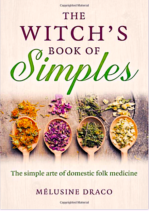
Book Review – The Witch’s Book of Simples: The Simple Arte of Domestic Folk Medicine by Mélusine Draco
Book Review The Witch’s Book of Simples: The Simple Arte of Domestic Folk Medicine by Mélusine Draco Publisher: Moon Books 208 Pages Publication Date: April 1, 2022 Witches have been using medicinal plants for cures of common ailments as part of their Craft for centuries. The most elementary cure is a simple – an infusion, poultice, or compress derived from a single herb. Nothing fancy, just effective: chamomile tea for sleep, elder flowers for coughs, peppermint for nausea – quick household remedies not intended as long-term treatments. Perhaps because they are so basic, they are often overlooked. Mélusine Draco wrote “The Witch’s Book of Simples: The Simple Arte…
-
Healing Oil Recipe
Healing Oil Recipe for Humans & Pets When it comes to my remedies my witch side comes to life. I have quite a few wise women in my lineage and I like to channel them when I offer any healing assistance or create remedies. My healing oil gets special attention in this area. It cleans wounds, speeds up tissue growth, and helps with bites and stings. I make it in bulk once a year, this way I can spend the year collecting the ingredients as I travel and charging them properly. A lot of work and energy goes into my healing oil. This infusion can be used on its own…
-
Notes from the Apothecary
Notes from the Apothecary: Heather Heather or ling, Calluna vulgaris, is a short, evergreen, bushy shrub with stalks of tiny purple, pink or white flowers, prolific on moorland or heathland. It’s native to Europe but has been introduced to many countries across the world. It often indicates areas of deforestation, where trees have not been allowed to grow back, so the heather and other shorter plants take over. I asked my three-year-old which plant I should explore for this month, and she said, “A pink one!”. After some pondering, I showed her some pictures of pink, purple, and white heather stretching across the moors, and she was delighted. So,…