Notes from the Apothecary: Hyssop
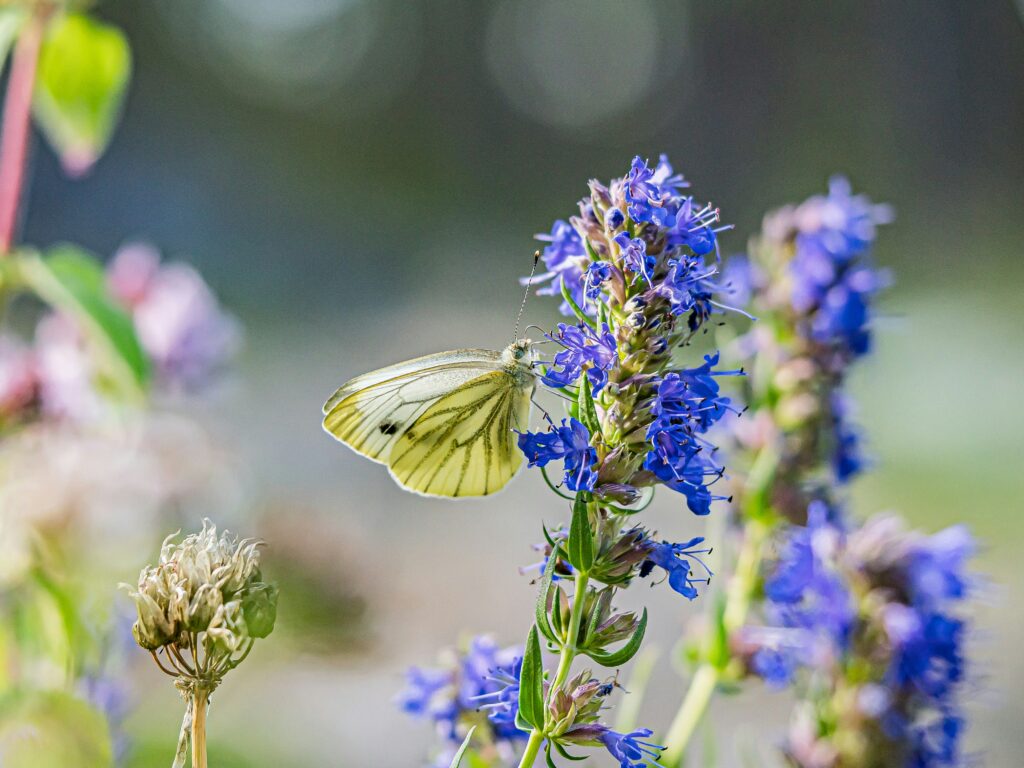
Hyssop (Hyssop officinalis) is a flowering shrub in the mint family (Lamiaceae), with a long history of medical use and a rich tapestry of folklore and religious connection. It was originally native to Europe and the Middle East, but now grows in many regions around the world, including North America. Hyssop is used in medical herbalism, culinary practices, and magic, and may have applications in modern medicine.
Let’s take a look.
The Kitchen Garden
Hyssop is a highly aromatic herb, and beautiful as well. The stems grow to two feet tall, and are topped with stunning, tiny flowers, most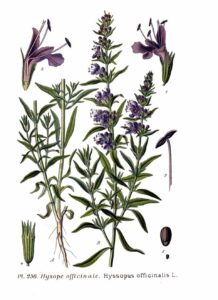 often in blue, but sometimes pink or white. Bees and butterflies love it, making this a wonderful addition to any wildlife-friendly garden or yard.
The fragrance of the herb is quite sweet, giving way to a bitter yet pleasant flavour that’s been used for culinary purposes for centuries. A common, modern use is for flavouring liqueurs, but some people still use the leaves in salads or stews.
The Apothecary
It’s important to note that while hyssop may have some beneficial medical properties, such as use as an antiseptic, the essential oil should not be ingested as it may cause convulsions. Never start taking a herbal medicine without speaking to a medical practitioner. Important: Do not consume if pregnant or lactating.
Historically, the herb has been used for alleviating the symptoms of many conditions, including:
- Coughs
- Wheezing and other lung problems
- Parasitic worms
- Constipation
- Jaundice
- Dropsy, an archaic term for oedema/edema, swelling caused by fluid retention
- Pain
- Bruising
- Quinsy (peritonsillar abscesses)
- Tinnitus
- Toothache
Famous historical herbalist Nicholas Culpeper said, in his 1652 classic, The Complete Herbal (originally The English Physitian), that the oil could get rid of lice, and that mixing hyssop with salt, honey, and cumin would offer relief from snakebites.
Modern research suggests that hyssop may be useful for cancer and HIV treatment, but studies are largely theoretical at this stage.
The Witch’s Kitchen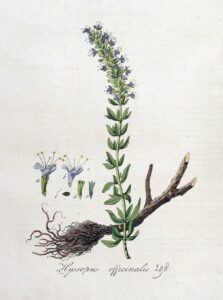
Hyssop has so many folkloric and religious associations, including mentions in the Christian bible. However, this can be seen as contentious, as some scholars believe that the use of “hyssop” in the bible actually refers to other plants, possibly capers, oregano, or some sort of fern. In my copy of The Folk-Lore of Plants by T.F Thiselton-Dyer, from 1889, there’s a brief mention that the plant hyssop may have been one of the plants that made up the infamous crown of thorns. Mrs Grieve refers to the phrase, “Purge me with hyssop and I shall be clean,” which is probably the root of the association between hyssop and purification.
Rachel Patterson speaks about hyssop in her book A Kitchen Witch’s World of Magical Herbs & Plants (Moon Books, 2014). She mentions its uses for protection and purification, and using it to protect the home from negative energies.
Scott Cunningham states that hyssop is a masculine plant, associated with Jupiter and the element of fire. Culpeper agrees with the Jupiter correlation and adds that the herb is associated with the sign of Cancer, stating that it, “…strengthens all the parts of the body under Cancer and Jupiter.” Witches and magical practitioners with an astrological leaning can use this information as needed.
Home and Hearth
Hyssop is a plant that tolerates dry, tough conditions. You can embody the qualities of this plant to help you through hard times. Carry a pouch of the herb with you when you’re struggling. You’ll gain the protective power of the plant, warding off negative energy, while bolstering your resilience.
Hyssop is a perennial plant, coming back year after year, no matter how harsh the winter is. Just like hyssop, you are strong enough to rise again, and blossom again when you’re ready.
I Never Knew…
Hedge hyssop (Gratiola officinalis) is a completely different plant to the hyssop described in this article. It is much more bitter and may be toxic in high doses.
…………………………………………………………………..

Mabh Savage is a Pagan author, poet and musician, as well as a freelance journalist and blogger. She’s a nature-based witch, obsessed with Irish and British Paganism and Folklore, plus she’s a massive plant and bird nerd. She’s also a long-time Hekate devotee and a newbie Lokean. She works extensively with the UK Pagan Federation, including editing their bi-annual children’s magazine, Aether. Mabh is a passionate environmentalist and an advocate for inclusiveness and positive social transformation.
Mabh is the author of The Magic of Birds, a beginner’s guide to bird spirituality, symbolism, and many more aspects of everyday magic. She’s also written several other books: A Modern Celt: Seeking the Ancestors, Pagan Portals – Celtic Witchcraft: Modern Witchcraft Meets Celtic Ways, and Practically Pagan: An Alternative Guide to Planet Friendly Living. Search “Mabh Savage” on Spotify and @Mabherick on all socials. No AI was used in the production of this article or the images contained within.
Image credits
Butterfly on hyssop flower, photo by Håkon Grimstad on Unsplash (copyright-free)
Hyssop illustrations are public domain
Mabh Savage author photo © Mabh Savage, all rights reserved